Monday in a Picture – Marula and Buganu

This past weekend, Swazis and friends in the northern region of the country celebrated the marula festival. The festival celebrates the harvest of the marula fruit, its resiliency, and the resiliency that it symbolizes for all of Swaziland. The tree produces delicious fruit, even in drought stricken summers. The festival happens at one of the royal residences, and the king and queen mother attend along with hundreds of Swazis. 

Swazis celebrate the marula fruit by home brewing buganu (pronounced boo-ga-new), which is a beer made from the fruit. One PCV, who lives in northern Swaziland, agreed (with his host family) to host a number of PCVs so that we could experience the fruit, the beer, and the festival. He and his host family spent considerable time brewing many liters of buganu for this weekend. The inner council of the community leadership came to his homestead to sit and share buganu with the volunteers. They talked about the fruit and beer before explaining how the beer is made. Then, there was a live, hands-on tutorial of home brewing buganu. The picture above is of the hosting host mom preparing to start the buganu brewing process. 

The fruit is removed from its skin, and placed in clean water. After three days, the seeds are removed from the fruit. Then, the mixture sits for another day. At this point, the beer is ready to be enjoyed. We learned that women typically brew the buganu for her husband and the family. Some women also sell buganu. A 25 liter container sells for between 50 and 100 emalangeni (pronounced emma-lan-gay-knee), which is the currency of Swaziland (on par with the South African rand). 

There will be another marula festival in a few weeks in a different region of the country. This is due to the marula fruit ripening at different times in different parts of the country. We learned that the fruit is not to be picked from the tree, as it is not yet ripe. The fruit should be picked up from the ground once it has fallen. 

Be kind to yourself. 
Onward. 

Follow What is Kirby Doing? on WordPress.com

​Monday in a Picture – The Homestead 

In Swaziland, we live with a host family in a rural community for the duration of our service. These communities tend to be very family oriented. Families live together on a plot of land called a homestead. Homesteads vary greatly in size, structures, and composition. There are some common elements with all homesteads around the country. 

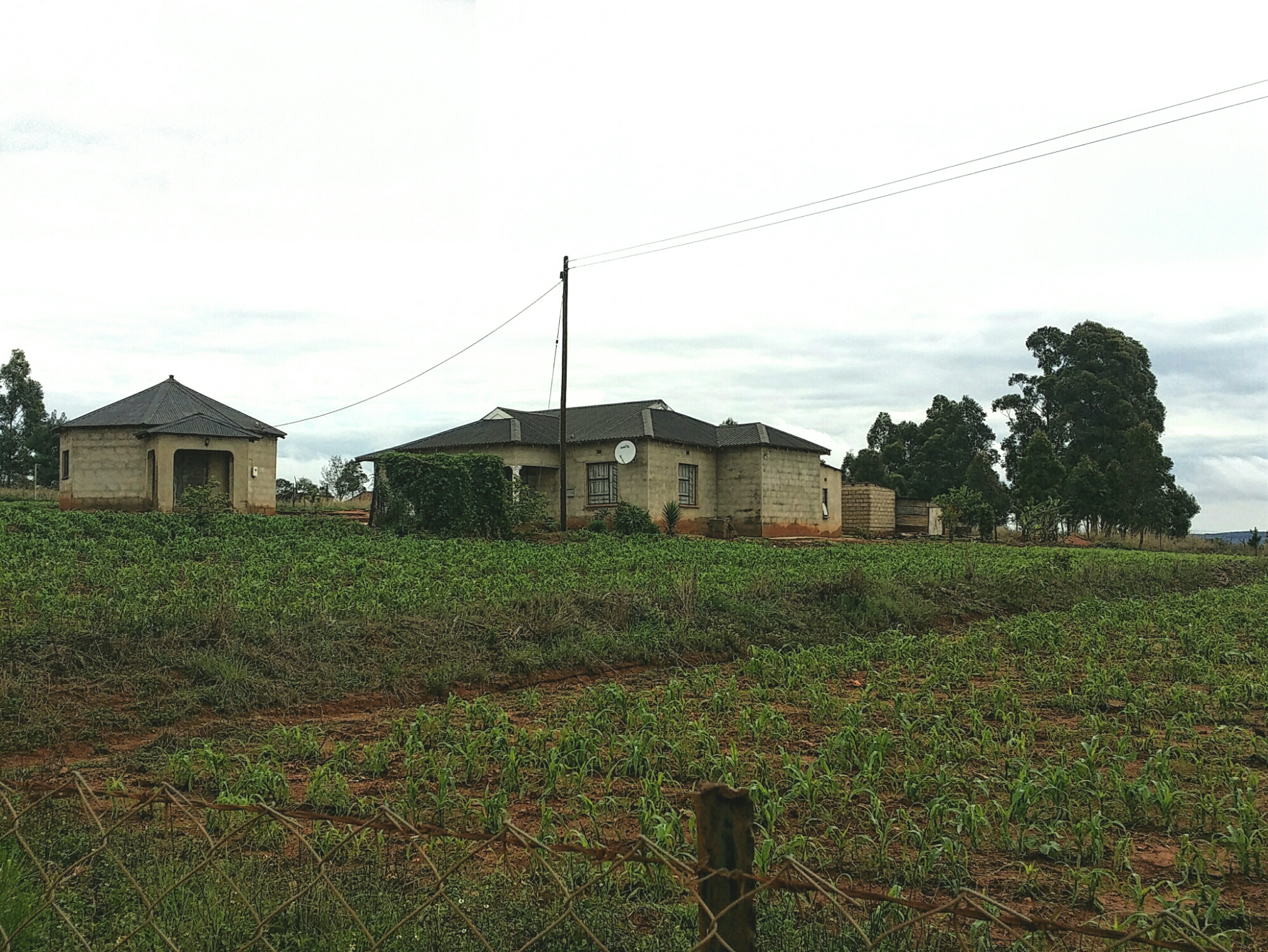
I have yet to see a homestead that doesn’t have a farming space to grow crops, typically maize. Most homesteads have multiple buildings on them. On my homestead (pictured above), there’s the main house, my house, a tool house, a chicken house, a guest room, and a pit latrine. Many homesteads also have a kraal (pronounced crawl), which is where the family’s cows live. Some homesteads with many extended family members may have one house for school age female children, and another house for school age male children. Some homesteads have a kitchen house, where food is cooked in a large three legged pot over an open fire. 

There is, of course, a process to acquiring land to build your homestead. It starts with going to the inner council at the umphakatsi (pronounced om-pa-got-see) to ask for land to build your home. The umphakatsi is the local governance structure of a chiefdom. In many rural communities and chiefdoms, only a married man can ask the inner council for land to build a home. It’s expected that you give a number of cows to the umphakatsi for the land you are given. Once the land for your homestead is acquired, you can start building whatever structures you’ll need. I’ve noticed that building homes tends to be a local community and family effort. 

Be kind to yourself. 
Onward. 

Follow What is Kirby Doing? on WordPress.com

From the @whatisKirbydoing Instagram: February 04, 2017 at 07:40AM

Today I learned that Dr. Carolyn Payton was the first Black director of the #PeaceCorps. She was also the first woman to lead the organization. #BlackGirlMagic #BlackExcellence #BlackHistory
Another cool fact: she started her teaching career at my alma mater, #LivingstoneCollege.
Photo credit: Getty Images

​Monday in a Picture – Build Your Own Bookshelf 

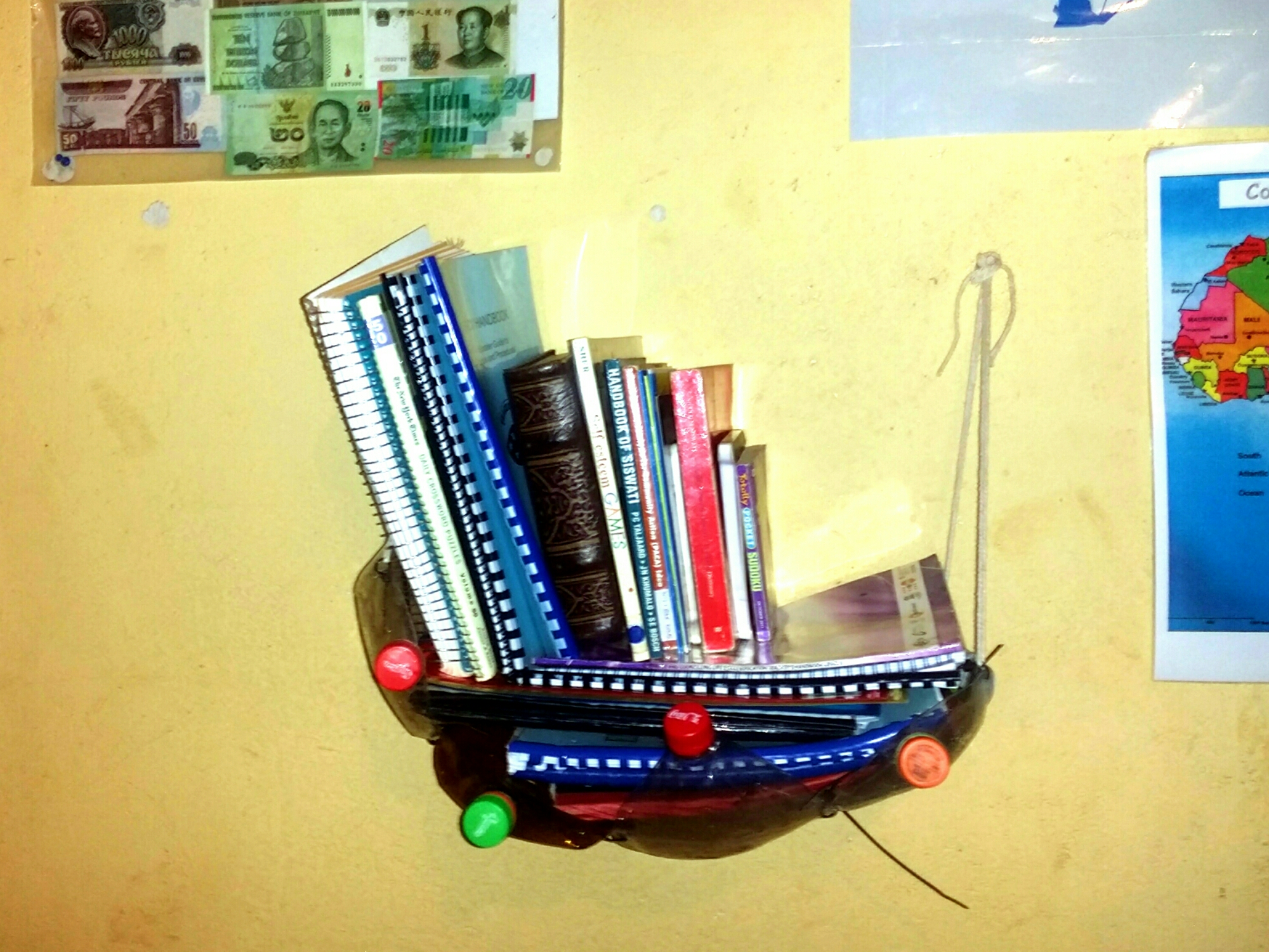
When I moved into my home here in Swaziland, it was a blank canvas. There was no furniture. There were empty walls. It was an invitation to create. 

After settling in to my home with a bed and homemade closet, it was time to tackle the next challenge. Where do I store all of the notebooks, manuals, and other random books that I’ve acquired since beginning my service? Thankfully, I rid myself of my book collection before leaving DC. Furniture can be expensive, especially when factoring in transportation costs. Building my closet provided me with the confidence and inspiration to take on another project: my bookshelf. 

I had some five empty soda bottles, thin rope, cement nails, zip ties, and duct tape. In my first attempt, I wrapped the bottles with the duct tape. Then, I tied the rope onto the ends of the bottles and wrapped the rope around the cement nails to hold it up. This setup wasn’t the best for bearing heavy loads. In my second attempt, I pushed all air out of the bottles and poked holes along the sides of the crushed bottles. Then, I zip tied the crushed bottles together and tied rope to the zip ties on the end. Finally, I wrapped the rope around the cement nails. This setup has been great for bearing the load of books. 

Be kind to yourself. 
Onward. 

Follow What is Kirby Doing? on WordPress.com

​Monday in a Picture – The Bus Rank 

The majority of transportation around Swaziland is done by minibus taxis, known as khombis. Imagine hundreds of fifteen passenger vans (typically Toyota Quantums or Mercedes Benz Sprinters) taking men, women, children, and chickens everywhere. The khombis travel through the cities and the rural communities. They travel on paved, tar roads, and on gravelly, dirt roads. Although the vans are  15 passenger vans, sometimes there are more than 15 passengers on board. The good news is that everyone gets to wherever they are going. The not so good news is that personal space doesn’t exist when riding in khombis (or buses) here. 

One of the features of Swazi transportation is the hub and spoke system. There are two major transportation hubs in Swaziland: Mbabane (the capital) and Manzini. These transportation hubs, known as bus ranks, are typically filled with khombis, buses, and young men yelling and/or whistling to advertise their khombi or bus, and where it’s going. For example, you might hear a loud whistle followed by Mankayane! Mankayane! Mankayane! If you don’t hear your destination being yelled, you can always stop to ask the bobhuti (pronounced bo-boo-tee), or young men, where you can find the khombi or bus that you need. One of the really helpful things about the bus rank is that khombis and buses tend to be in the same spot or area everyday.

While buses tend to have specified (though not posted) departure times, khombis tend to leave whenever they fill up with passengers. This could be why the bobhuti sometimes grab your bags while yelling questions like, “Uyaphi?” (pronounced oo-yah-pee), or where are you going? It makes great sense. A khombi sitting in the bus rank is not a khombi making money. 

You can also find all kinds of items for sale at the bus rank. There are clothing items, cosmetics, snack food, produce, drinks, and more. While buses are waiting to depart, various vendors will also come around to sell their wares. There are also various shops and stores that surround the bus rank. Because most urban businesses in Swaziland close in the early evening (between 5PM and 7PM), the bus rank has much less activity and traffic at this time. 

The picture above shows rows of khombis parked and waiting to fill up with passengers in the Manzini bus rank, which is the largest in the country. 

Be kind to yourself. 
Onward. 

Follow What is Kirby Doing? on WordPress.com

​Monday in a Picture – Grow Your Own Food: the Garden

Last week, I finished my garden. I used the techniques that we learned in a training session last month. Read about that training here. Building this garden was a great way to test my own knowledge and skill before leading trainings in my community. I’m still planning the community demonstration gardens with community leadership.

Double digging to depths of 30+ centimeters is hard, tedious work. The Swazi sun made the task even more unappealing. I hyped myself up by watching Ron Finley’s TED talk about guerrilla gardening. While the entire video is extremely motivational and inspiring, one quote stuck out to me.

“Growing your own food is like printing your own money.” – Ron Finley

I like money. I like food. Challenge accepted! It took four days to complete. I’m happy to announce that it’s done. Some of my neighbors came over to learn and help. It felt great to actually understand permagardening well enough to explain it to others. 

I’m sure that I didn’t do everything perfectly. There were measurements that I forgot to take. My idea (and practice) of companion planting is definitely not what we learned. I didn’t add ash or charcoal to the soil because we didn’t have any available. 

For those who may be wondering what I am hoping to grow, I planted seedlings of lettuce, red cabbage, Chinese cabbage, butternut squash, onions, okra, basil, something called rocket (which the sales associate told me is like spinach), broccoli, cauliflower, and eggplant. I planted seeds of chamomile, flowers, tomatoes, and spinach. Now, I’m just hoping that the seeds and seedlings turn into food.

Be kind to yourself. 
Onward. 

P.S. – This is what the space looked like before it became a garden. 

Follow What is Kirby Doing? on WordPress.com

​Monday in a Picture – Community Shop

Grocery shopping is an all day task for me from my rural community. It involves taking public transportation to a town that’s approximately 25 kilometers away. Because it’s such a time intensive activity, I try to limit my trips to once or twice a month. I have also started using a grocery list to make sure I get everything that I need. 

Inevitably, there is something that I forgot while on my grocery shopping excursion. For anything that I did forget or didn’t put on my list, there’s the sitolo (pronounced see-toe-low), or shop. At a community shop, you can find essential items like bread, rice, cooking oil, and beans among other things. My community has at least four shops. The shops vary in size. They also vary in their offerings. At least one of the shops in my community sells various cuts of meat and margarine. 

The prices at the community shops are a tad more expensive than prices at larger grocers. Even in Swaziland, stores that are convenient have a price for that convenience. And it’s very convenient to spend a rand or two more for a few items instead of spending an entire day (plus transportation money) to get those same items. 

Be kind to yourself.
Onward.

Follow What is Kirby Doing? on WordPress.com