Monday in a Picture – School Lunch

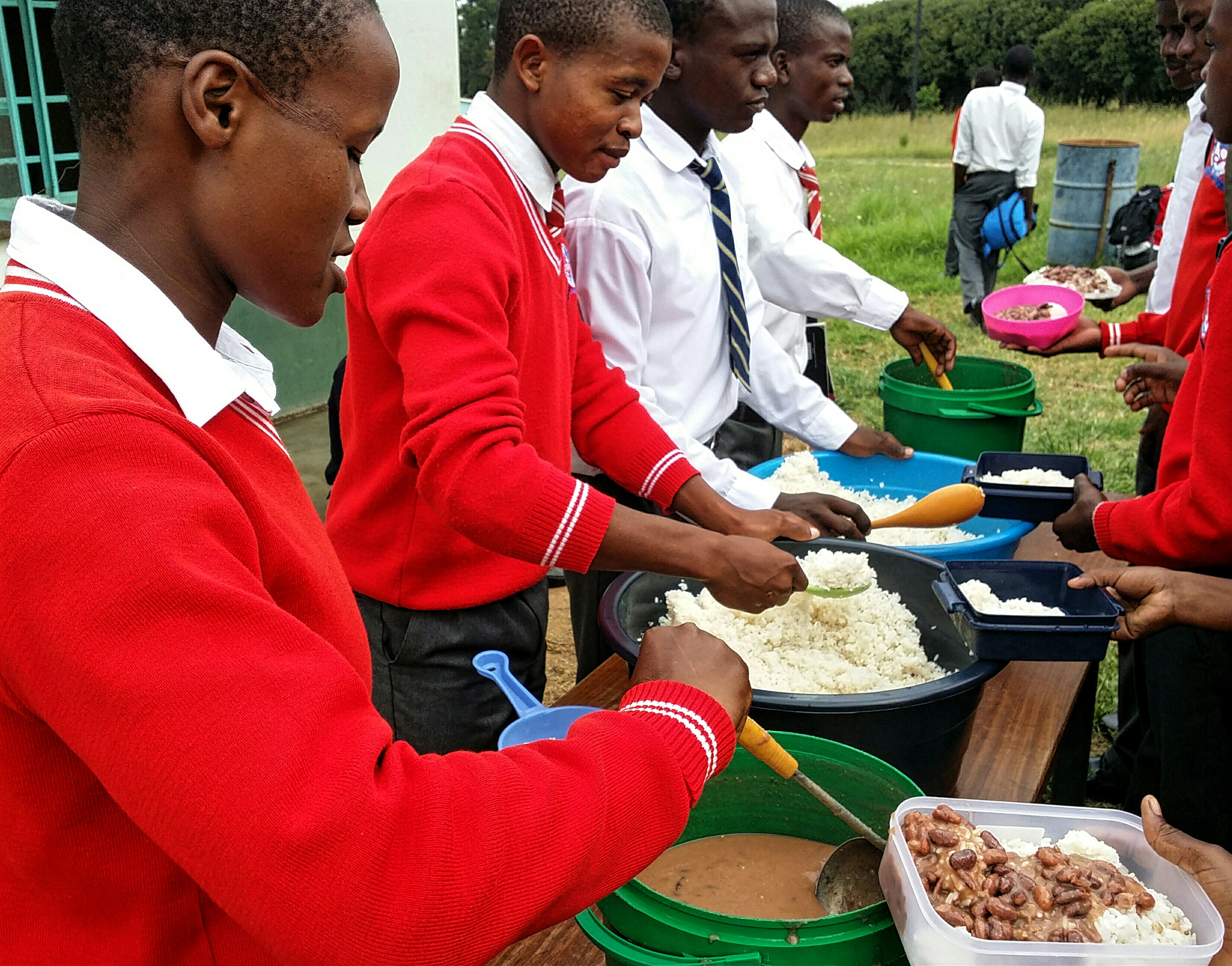
The schools in Swaziland serve lunch every school day. The daily menu is minimally varied. Some days, the students are treated to soupy beans with rice. On other days, the afternoon delight is non-soupy beans with rice. 

School lunch costs are included in the annual school fees assessed to secondary school students. All primary school students and some secondary school students are fully funded by government. 

At lunch time, students line up outside of the kitchen with her/his dish and eating utensil. Four or five older students are responsible for serving their classmates. They set up a table with at least two basins filled with rice and at least two basins or buckets filled with beans. After being served, students sit around the school grounds while enjoying lunch. Students can supplement their lunch with snacks from the bomake market. 

Be kind to yourself. 
Onward. 

Ever wonder what is Kirby doing? Follow the blog!

Monday in a Picture – ​Grow Your Own Food: The Harvest 

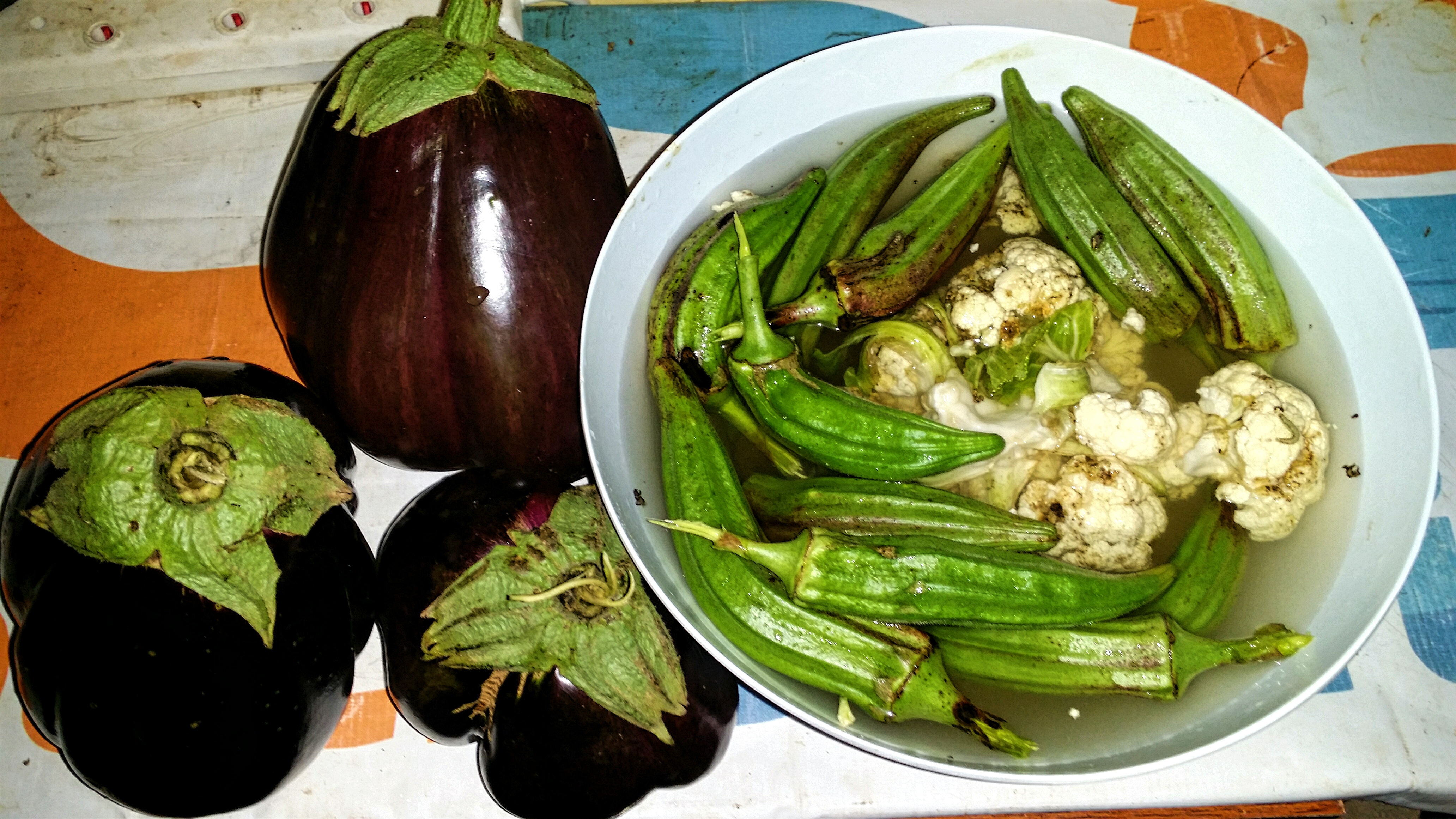
Last week, the farm-to-table experience took on new meaning. I was watering my garden when I noticed that some of the crops were ready to harvest. Some crops, namely the cauliflower, had been sacrificed to garden pests. However, there were eggplants and okra that were ripe and ready. I should mention that I had completely forgotten that I even planted eggplant. I’m thankful that the eggplant didn’t forget it had been planted (like my tomatoes did). 

I harvested three beautiful eggplants and some okra. Now, I was faced with a new challenge. What do I do with this produce? I had never cooked fresh okra. I had never cooked (or eaten) eggplant, in any state. Thankfully, there were friends and Google to help me make culinary sense of the harvest. 

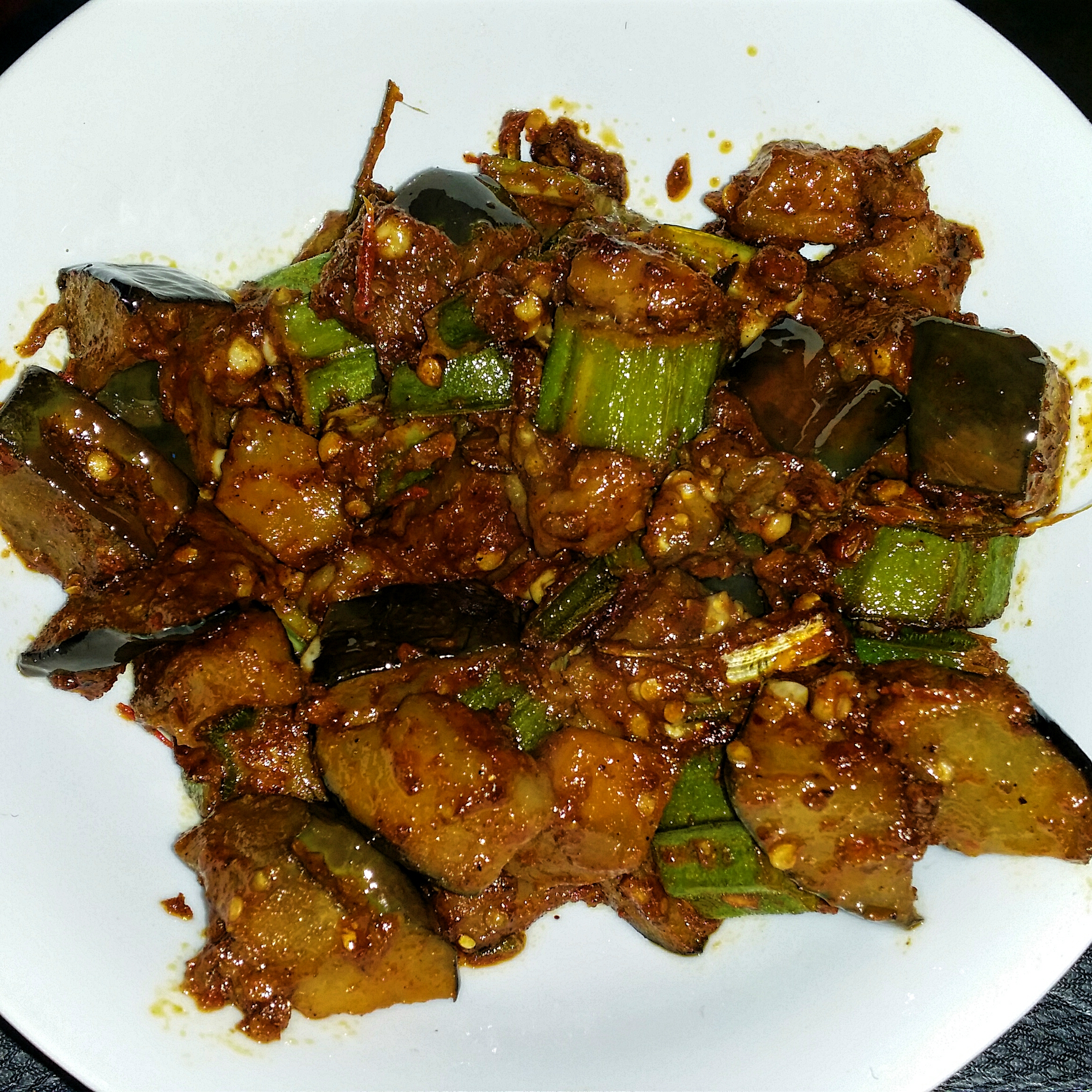
I decided to make an eggplant and okra stir-fry. It was delicious! It was hard to believe that I was eating a meal that had been grown by my own hands. In reality, it’s difficult for me to take full credit for the meal. While I planted the crops and watered them (when I remembered), the Earth did most of the work. The garden was much kinder to me than I was to it. For that, I’m thankful. 

Be kind to yourself. 
Onward. 

Ever wonder what is Kirby doing? Follow the blog!

Monday in a Picture – Inspiration from Mother and others

​Everyday before I leave my house, this is what I see. It’s important to stay motivated and inspired while serving. People have sent postcards, greeting cards, and letters from all over the world during my time in Swaziland. I’m extremely grateful to all of those who have taken the time to write kind words and send them to me. 

To make my house feel more homey, I added pictures of those responsible for my being to the inspiration wall. They include my great grandfather, his daughter (my grandmother), and her daughter (my mother). It was on this day seven years ago that my mother passed away. She’s actually (partially) responsible for my serving in the Peace Corps. She pushed us to serve others with compassion. She instilled a sense of exploration. She made sure that we respected and embraced those who might be different from us.

Having these visual reminders has been great for keeping me motivated in the rural community. It makes my service feel a little less lonely. 

Be kind to yourself. 
Onward. 

Ever wonder what is Kirby doing? Follow the blog!

Monday in a Picture – Coming to America

Photo credit: U.S. embassy (Swaziland)

One of the things that I hear often around my community is a desire to go to the United States. Some people want to study in the U.S. Some want to travel and see the sights. 

In December, our country director sent all current Swaziland PCVs an email announcing recruitment for the Pan Africa Youth Leadership Program (PAYLP). The exchange program is sponsored and funded by the U.S. State Department, and coordinated locally through the American embassy and other partners. 

The school term had already finished, so I sent the message to a few teachers at my community high school to see if they wanted to nominate anyone. A teaching colleague wanted to nominate her son. He completed the application and motivation statements, and I submitted his application. 

In early February, we received notice that my teaching colleague’s son was one of five Swazi students accepted into the program and would be going to America in April. This started a busy month of obtaining passports and other documents. Then, there was the visa application process (which reminded me of the extreme privilege that comes simply with being born in America). Finally, there was the pre-departure orientation at the U.S. embassy in Swaziland. The students were able to meet the rest of the cohort, attend visa interviews, and allay some fears and worries about the trip. 

There was a video conference with representatives from the State Department, other partners, and participants from all PAYLP countries (10 nations in total, including Swaziland). The students were all very excited. This month, their collective excitement becomes reality when they arrive in the United States. They will meet with various American officials, study at local universities, and have homestay experiences with American families. The only thing left to do is get on the plane. 

In the picture above, the Public Affairs Officer (middle) poses with the students and their adult mentor.

Be kind to yourself. 
Onward. 

Ever wonder what is Kirby doing? Follow the blog!

Sweet Dreams – College Days

Because I am posted in a country where I might contract malaria, I have been given an antimalarial medication called, “Mefloquine”. One of the side effects of this medication is lucid dreaming. The following is what I dreamt last night (as best I can remember). 

​I was in the college bookstore. It may have been around homecoming. I’m not sure if I was a student or not. I don’t think I was. It was definitely Livingstone College (my alma mater), but not the one that I remember. The book store didn’t have any books. It looked kind of like a convenience store on the inside. 

I had decided that I wanted some college swag. I was looking at hats. I didn’t see any baseball caps, so I checked out the knitted winter caps. They were really, really nice. I didn’t see a price anywhere, so I asked the guy working in the book store. He didn’t tell me the price, but he did say that I was lucky and the hats were ten dollars off today. I asked for the price again. He repeated himself. I looked on the inside of the hat. The tag said that it was 100 percent wool and that it was $220. I asked the guy if it was really $220. He reminded me that I got ten dollars off. 

Then, I went to the cafeteria. It was almost closing time. There was a line of students (I’m guessing) coming out of the door. I stood in line. They were serving spaghetti with meat sauce. Some of the people seated choose to the serving line invited me to sit with them. They all looked vaguely familiar but I didn’t know any of them. 

There was a pitcher of orange drink sitting on the table. I wanted to get some soda from the soda fountain in the back of the cafeteria, but I noticed that the soda fountain was in a different part of the cafeteria. It was separated by a glass wall, and I couldn’t get over there. 

Be kind to yourself. 
Onward. 

Ever wonder what is Kirby doing? Follow the blog!

Monday in a Picture – School Assembly 

I spend most of my time at the high school. There are classes to be taught and conversations to be had. In addition, I genuinely enjoy being at the school. The students are engaging while challenging me to speak more siSwati. Fellow teachers bounce ideas around with me, and also encourage me to speak more siSwati. 

Most days, the school day begins and ends with an assembly. When the bell rings, all students come together and stand in line with their respective grade level. A teacher or administrator stands in front to lead the learners through the assembly. 

One of the older students will start to sing a song. The other students join in the singing at appropriate times. After the song, the students will recite a prayer. The song is always in siSwati or isiZulu. The prayers and prayer languages vary, and are sometimes recited in English. After the prayer, the staff person facilitating the assembly will say “good morning/afternoon, students”. In unison, the students reply “good morning/afternoon sir/ma’am. Good morning/afternoon teachers. Good morning/afternoon sisters. Good morning/afternoon brothers.” At this point in the assembly, staff make any announcements pertaining to the students (i.e., remind your parents about the meeting tomorrow, etc.) The assembly ends after announcements are made, and students go either to class or home. 

The above picture is of the students lined up for afternoon assembly at the high school. 

Be kind to yourself. 
Onward.

Ever wonder what is Kirby doing? Follow the blog!

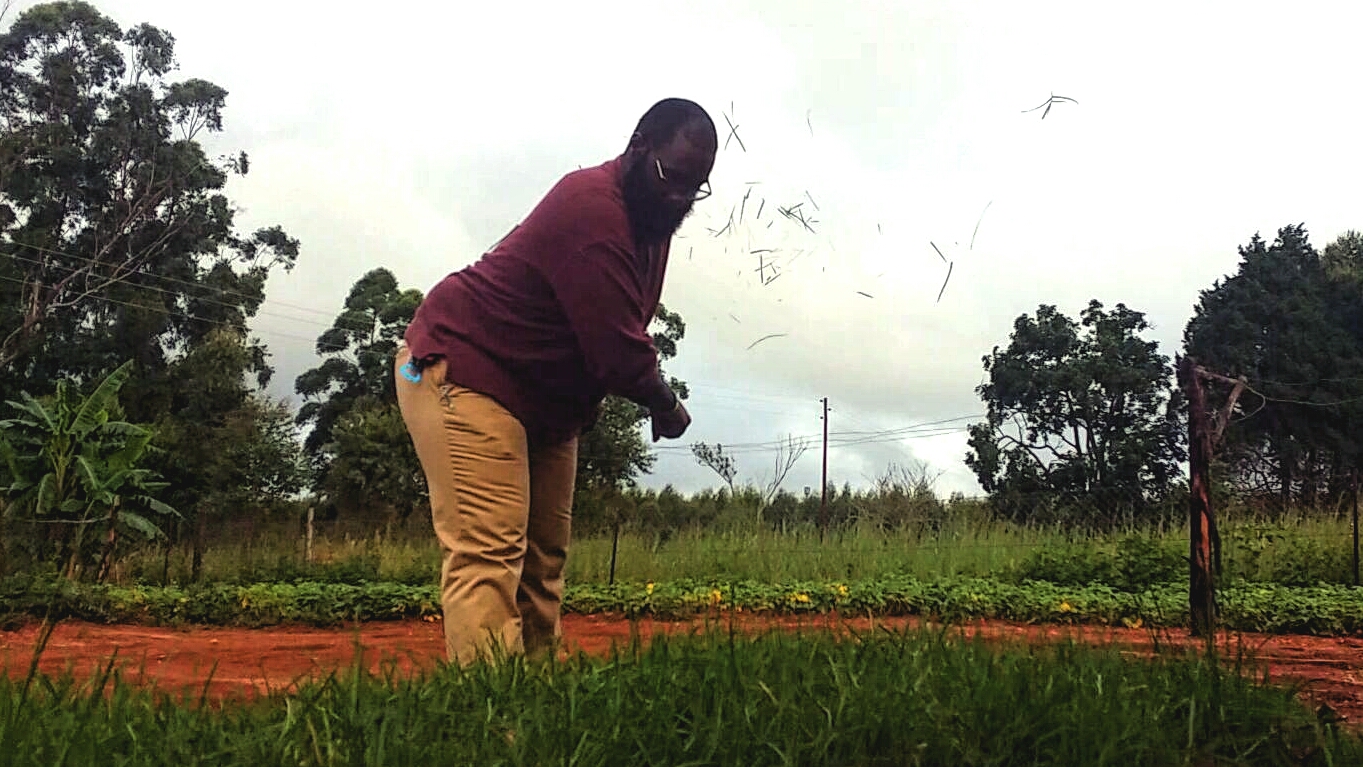
Monday in a Picture – Cutting Grass

It was the summer of 2006. This was the summer before my senior year of college, and I was spending it with my uncle and his family in Fayette County, Georgia. All of the single family homes seemed to have perfectly manicured lawns. There wasn’t a blade of grass out of place. On one Saturday morning, my cousin, uncle, and I got up early. It was time to cut the grass at our house. 

This was a new experience for me. I had never cut grass, or done any yard work. My cousin and uncle taught me how to start and use the gas powered lawnmower. It was hard work. I wasn’t able to achieve that perfectly manicured look that I saw at the neighbors’ homes, but I got the job done. 

Almost eleven years later, I am responsible for maintaining the grassy area around my home on the homestead. My host mom reminds me of this when my grass grows too high. She warns me that high grass gives snakes places to hide. 

Lawnmowers are a rarity in Swaziland. They are practically non-existent in the rural community. There are two options for cutting grass. There’s an older pair of garden shears, and there’s something called a siheshe (pronounced see-heh-shay), or slasher. It’s smaller than a bush knife and has a modest handle with a thin, long metal blade. When my host brother was home for the Christmas holidays, I saw him using the siheshe to cut grass. I asked him how one cut grass with it. He responded simply, “just beat the hell out of it”. I remembered that on one weekday afternoon as I attempted to cut my grass, Swazi style. Eventually, I found a rhythm. I also found a new appreciation for lawnmowers. The slasher gets the job done and gives you a workout. Luckily, I only have to cut the grass twice a month. 

Be kind to yourself. 
Onward. 

Follow What is Kirby Doing? on WordPress.com

Getting naked in Cape Town (SFW)

It was Sunday evening. I had returned to Swaziland to attend training. I was on cloud nine after having the most amazing weekend in Cape Town. I had started the weekend with two goals. Eat great food and ride bikes while naked. Cape Town is known for some exquisite cuisine. The World Naked Bike Ride happened to be on the same weekend. Both of my goals were exceedingly accomplished! I ate amazing Thai food and sushi. Other PCVs at the training commented on how refreshed I looked as I shared highlights of the weekend. I smiled. I was extremely rejuvenated. 

One PCV friend asked when I would be writing about this experience on my blog. I responded that I wouldn’t be writing about the naked bike ride weekend. I had reasoned that the weekend was not related to my Peace Corps service, and that this blog was singularly about my service. I had reasoned that I wanted to be a “good” volunteer, and not attract bad publicity or attention to the Peace Corps. 

The World Naked Bike Ride (WNBR) is a clothing optional bike ride that takes place in more than 70 cities around the world. People from all walks of life join in to celebrate people powered transportation. Most ride bikes. Some ride longboards. Some participate in roller skates. Others choose to run. 

The reasons that people choose to participate, like the participants themselves, are diverse. Some people want to bring attention to our global dependence on non-renewable energy. Others want to highlight the vulnerability of cyclists and remind motorists to share the road. There are naturists, and naturism activists, who use the ride to promote a clothes-free lifestyle and remind the world that nakedness does not equal sex or lewd behavior. 

My first WNBR was 2012 in Philadelphia. A big reason for my participation, at the time, was to be part of an exciting counter-culture. It was thrilling to be around 2500 people in various states of undress. 

To date, I have done the WNBR in six cities on three continents. While it’s still exciting to be naked and ride bikes through the city, I have added to the reasons that I ride. Having struggled with body image issues at various points in my life, I try to fully embrace body positivity, both in practice and thinking. People with all kinds of body types participate in the ride, and all are welcomed and embraced by fellow ride participants and most onlookers. Cape Town was no different. As we rode through the city, people lined the streets to cheer for us. The smiles were plenty. The weather was perfect. I was even gifted some delicious pizza after the 7.5 km ride. I even posed for pictures, and completed some interviews (one of which ended up on Japanese news). Body shaming has been normalized and is commonplace in far too many places. Simply stated, I ride because I refuse to embrace a culture of shame. 

After much internal debate on whether or not I should write about my experience at the Cape Town WNBR, I decided that it was necessary. Yes, this is a blog about my Peace Corps experience. However, that experience isn’t limited to teaching classes, building gardens, and writing grants. Also, I believe in the importance of fully representing the great expanse known as the US of A. Some day, someone will read this while wondering if there is space in Peace Corps for them with all of their unique intricacies. Let this post be a resounding yes! 

Be kind to yourself. 
Onward. 

Follow What is Kirby Doing? on WordPress.com