From the @whatisKirbydoing Instagram: May 10, 2018 at 01:00PM

This past Saturday, I was present for an important part of the marriage process in eSwatini. The lobola (pronounced la-bow-lah), or bride price, ceremony. In Swazi culture, a man (and his family) must compensate his bride-to-be’s family. This bride price is usually paid in cattle, though modern times have seen some families paid in cash.
Like many other things in eSwatini, the community is present as the two families join to discuss how much lobola should be paid. These negotiations are closed to everyone except family. The lobola rates are pretty standardized, but they can vary depending on some factors. Typically, the first born and last born girl will garner 17 cows. Other girls in the birth order usually garner 15 cows. The groom must bring a number of cattle to the negotiations to show that he is serious about marrying. My counterpart and friend, also known as the greatest Peace Corps counterpart in the world, is getting married! After the negotiations are complete, the people gather under a tent for brief praise and worship, and to give thanks for the joining of families in the union of marriage. Following the praise and worship, everyone enjoys food and fellowship.
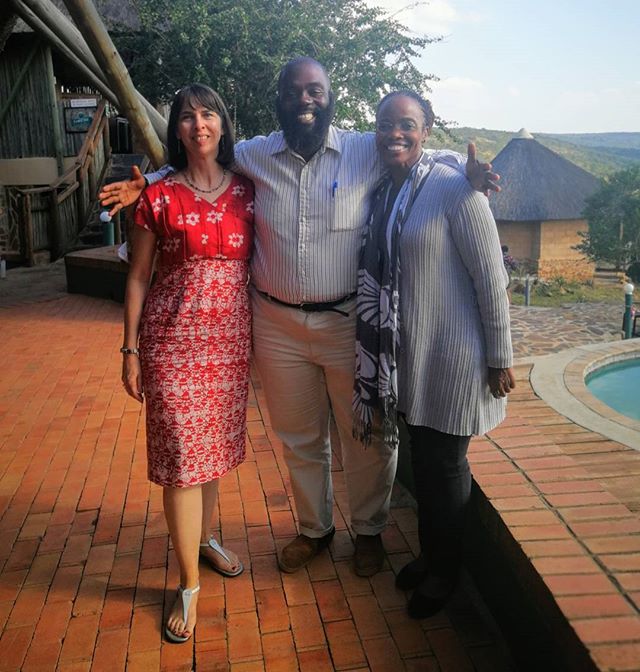
Congratulations to Nozie and her beau (pictured above) for taking the next step in their life together. May the joy of the lobola ceremony fill their marriage.
Be kind to yourself.
Onward.

One of the greatest things about eSwatini is its prime location. Depending on where you are in the country, Maputo in Mozambique is a couple of hours away as is Durban in South Africa. The metropolis of Johannesburg is about four hours away, as is its massive airport known as OR Tambo. OR Tambo is one of the few airports in the world that has non-stop flights to every continent (excluding Antarctica). This connectivity is awesome for those wishing to explore the region. It’s also awesome because there are frequent flights to one of my favorite cities: Cape Town.
My host make (pronounced mah-gay), or mother, thinks I might have a wife and family in Cape Town because of my affinity for the city. Spoiler alert: I don’t. It just offers many things that I enjoy: beaches, outdoor activities (like hiking and biking), and food. I’ve enjoyed delicious ceviche and tacos. I’ve delighted over succulent Thai curries and sushi. I’ve participated in the city’s version of the World Naked Bike Ride (WNBR) and hiked Table Mountain. I’m currently in Cape Town decompressing post-AfrikaBurn. Although this post is being written well in advance of you reading it, it’s safe to assume that I’m relaxing somewhere in the city with good food and good vibes. The above picture was taken from a rooftop deck on Long Street in Cape Town.
Be kind to yourself.
Onward.

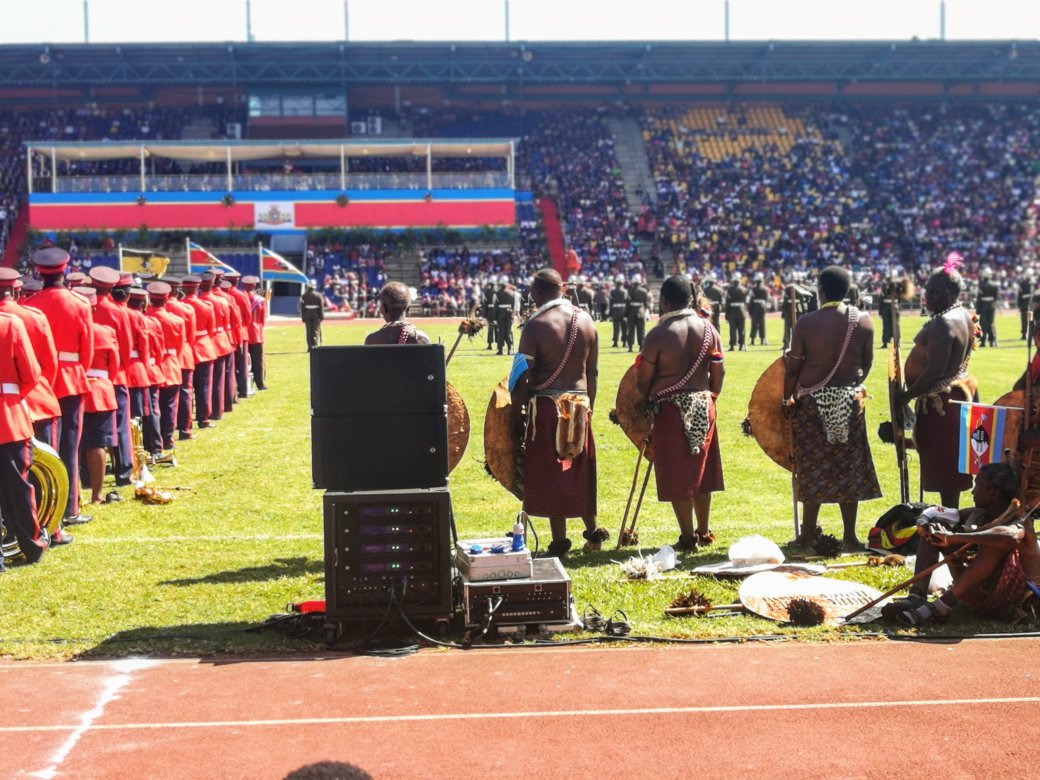
Last week, His Majesty King Mswati III celebrated his 50th birthday with Swazis and others. The national celebration, called the 50/50 celebration, also commemorated 50 years of independence from British rule. Thousands of Swazis and guests gathered in Manzini for dancing, singing and merriment. While His Majesty’s speech touched on several topics, one of the biggest was his changing of the country’s name.
What was formerly the Kingdom of Swaziland is now the Kingdom of eSwatini. The king stated during this declaration that a big part of this decision was because of what they called themselves before British rule. Fifty years ago, British rule became a thing of the past. Last Thursday, the British name for the country became a thing of the past. I was with a small group of PCVs and friends in Mavuso stadium when the king made this declaration. There was an eruption of applause and cheering upon the declaration.
Some friends have asked me what I think about the name change. While I don’t have strong opinions, I think it’s a beautiful thing to be true to your identity and to reclaim any identity you may have lost. There’s beauty in the realization that you haven’t been true to yourself; for it’s a starting point of redemption. For that, I am happy.
The above picture was taken during the 50/50 celebration while His Majesty was giving his speech.
Be kind to yourself.
Onward.

I have come to appreciate many things about Swaziland. The flora and fauna are quite awesome. Living in a rural part of Swaziland, I get to see beautiful birds and fantastic flowers. I also get to see stars in a way that I’ve never seen them in the US. It’s no secret that I’ve spent most of my life in cities. In a world filled with city lights, the light pollution isn’t as evident. It’s normal.
Rural Swaziland introduced a new normal. I don’t know the names of various stars. I’ve never studied constellations or astronomy. My community doesn’t have street lights. Instead, the community is lit by lights on homesteads that have electricity. The rest of the light is provided by the moon and stars. The views are definitely one of the perks of being here. The above picture is of the night sky as seen above the electricity pole across from my house.
Be kind to yourself.
Onward.

When going out in Swaziland, there are some routine options. Some choose to party at Solani’s in Mbabane while others choose the Pub and Grill in Ezulwini. Some choose to eschew city venues, and opt for rural and semi-rural bars (called shabeens). Then, there’s Friday Night Live.
Friday Night Live is a sporadic monthly/bimonthly competition series at House on Fire in Malkerns. This is same venue that hosts the annual Bushfire Festival. The event typically features three up and coming, local musical acts. The musical acts, who each perform one set, have the chance to perform at the Bushfire Festival. When live musical acts aren’t performing, one of the house DJs plays. One of my favorite DJs in Swaziland, DJ Mkay, was spinning this past Friday. The picture above is of M. Triggerson performing last Friday.
Be kind to yourself.
Onward.

Last week, the dreams and desires of a fellow PCV were actualized. In Swazi Spring 2017 (August-September), Dawnita saw a documentary about a girls step team from Baltimore, Maryland. She was moved by documentary, and shared that she wanted to do a documentary screening for the girls in her community.
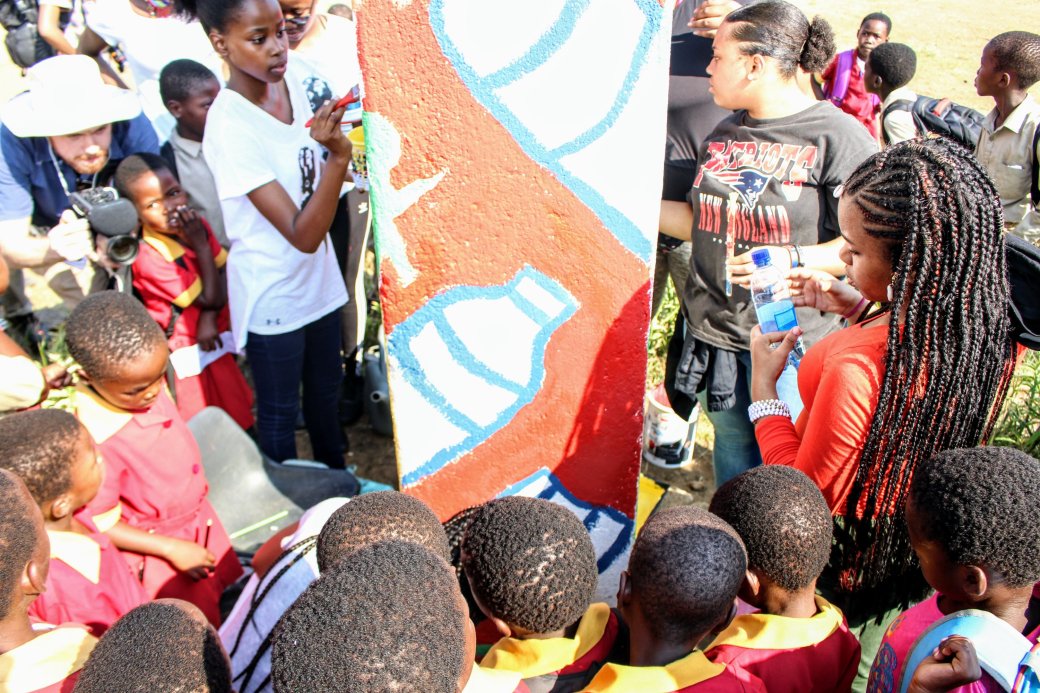
She had conversations with folks from Baltimore, her hometown. They assembled a team and began working on bringing an idea to fruition. What if Black girls from this step team in Baltimore could connect with Black girls from South Africa and Swaziland? What if the image of their international contemporaries was formed by more than the media? Black Girls Global Exchange (BGGE) was born. More than fifteen high school girls and chaperones from Baltimore journeyed to South Africa and met up with high school girls from Manzini (Swaziland) and Soweto (South Africa). Together, they explored Soweto (and shared dance moves). The girls enjoyed a week of intercultural exchange as they tried new cuisine, shared stories, and completed service projects side by side. I was fortunate to be one of many photographers capturing the events.
On Thursday, girls from all over Swaziland joined the BGGE participants in central Swaziland for a screening of the documentary and a symposium. It was beautiful and emotional. It was surreal at times watching the girls truly and fully embrace the sentiment that we are much more alike than we are different. As the BGGE participants marched into the conference room for symposium, they were indistinguishable. Girls from Manzini and Baltimore wore matching outfits as they led chants of “B-G-G-E”. The energy was electrifying.
During the symposium, a light lunch was served. Two BGGE mentors from Baltimore, who are professional chefs, joined Swazi chefs in the kitchen to prepare a delightful experience highlighting American and Swazi foods. Shrimp and grits (an American favorite) was served alongside chicken feet, pap, and Swazi cornbread (all Swazi favorites).
While the symposium featured many powerful moments, I’d like to highlight two. During the panel discussion (pictured above), BGGE participants from Baltimore and Manzini discussed what they had learned from nearly a week of intentional cultural exchange. The girls shared how they connected on the challenges they face in their respective homes. Gender based violence and inequality is problem in Swaziland and America. HIV plagues both nations with so many infected and affected. At another point in the symposium, the participants from Manzini closed a presentation with a beautiful song. The lyrics hit me as tears fell. “Shine your light–Be the light–We, Black girls; we gotta stick together”. As the lyrics repeated, the stage began to fill with the BGGE participants from Baltimore and other girls. It was one of the most beautiful things I’ve seen during my time in Swaziland. The Black Girls Global Exchange is the epitome of Black girl magic.
Be kind to yourself.
Onward.
P.S. – Below are more pictures highlighting the Black Girls Global Exchange.


Correction (8 April 2018): There were 4 middle school girls from Baltimore, Maryland, in addition to the high school participants.
The lyrics from the moving song (during the symposium) were: “Show the light…give them life…we black girls…let’s work together.” It was written and arranged by BGGE Swazi Ambassador Nosfiso Magagula, 17 years old.

In late 2017, I was at home browsing Reddit as I had done many evenings prior. I’m not sure what I had searched or what sequence of clicking had landed me on this page. At first glance, I thought it was one of the internet’s jokes. One thread read “…Wikipedia offline…”. My interest piqued, I decided to take a look.
The Wikimedia Foundation decided years ago that they would make the entire Wikipedia database available to the public. In other words, someone could now download the entirety of Wikipedia’s content and have access to it without internet connectivity. Various programmers and organizations developed offline browsers that could be used with the database files. One such organization is Kiwix. The Kiwix platform uses .zim files and features many products from the Wikimedia Foundation including WikiVoyage, Wikitionary, and Wikiversity.
With knowledge of this possibility, I immediately thought about conversations at the school during the past year. Our students were trying to keep up in the information age without reliable access to information. We had a computer lab, but no internet connectivity. I spoke to my head teacher and counterpart about the possibility of equipping the computer lab with offline Wikipedia. They agreed, but wanted to see something in action. I decided that I would put together a proof of concept presentation. I downloaded Kiwix for Windows and the Simple English .zim file. When I showed my colleagues how the program worked, they began to share my excitement. My head teacher requested that we move forward with the larger Wikipedia files. I spent half of November and all of December downloading Wikipedia for Schools, Wikipedia (in English) without pictures or videos, and other wikis.
Now, the 2018 academic year is under way. The computers in our lab are now equipped with the offline Wikipedia resources, and I am teaching students and colleagues how to use the software. Many of my colleagues and students are very excited. The software is being used by teachers to brush up on some subjects. Students are using the software to better understand the topics covered in class and to prepare for their external exams in term three. Throughout this term, students have stayed after school to study and print Wikipedia articles to use at home.
Last week, I was invited to another volunteer’s school to present on the Wikipedia resources to their students and staff. Apparently, their students really enjoyed the presentation. On the day following the presentation, they convinced their teacher to take them to the computer lab. Once there, they debated advantages and disadvantages of social media use. One of the teachers at their school also took her students to the computer lab to better understand iodine and its properties.
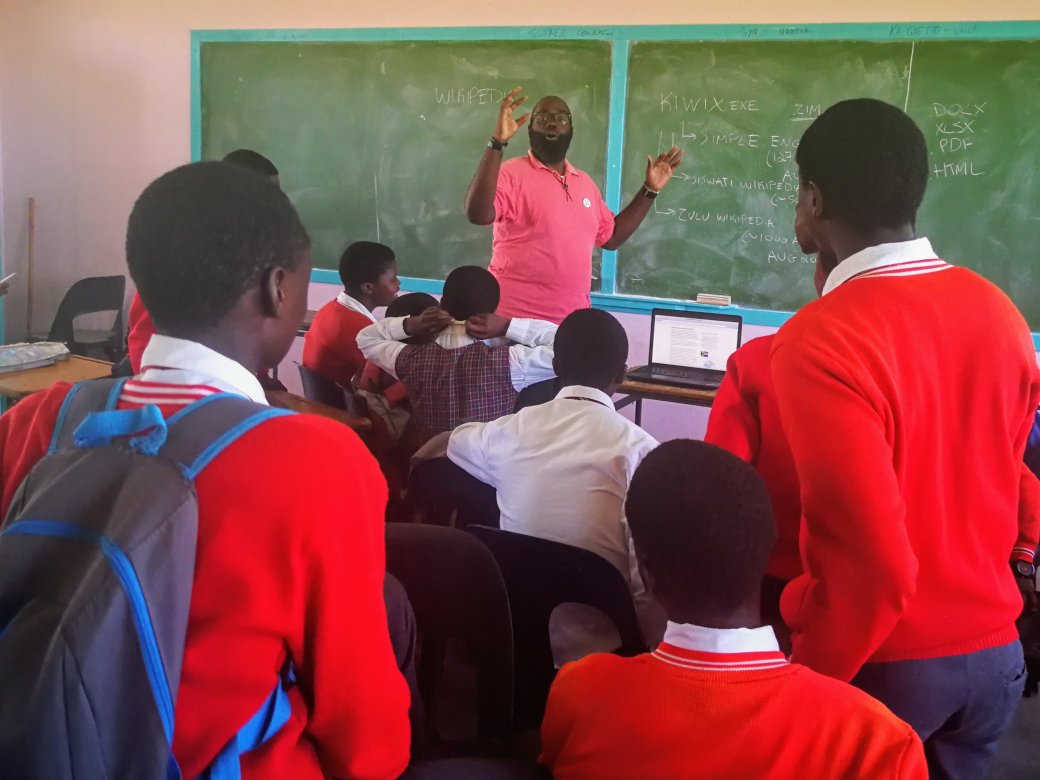
I’m beyond excited to see this project taking shape. In my vision for Swaziland, all schools would be using Wikipedia offline if they don’t have internet access. I’m also excited about chipping away at the digital divide. The picture above (taken by one of my students) is of me teaching my Form 4 students about the various wikis.
Be kind to yourself.
Onward.