Monday in a Picture – Condoms in the kingdom

Swaziland is home to highest HIV prevalence rates in the world. Approximately 26% of 15-49 year olds in Swaziland are living with HIV. This high prevalence was a major factor in the king asking Peace Corps to return to Swaziland in 2003.

While various factors contribute to the high prevalence of HIV, access to condoms has been made easier (and cheaper) to prevent the spread of the virus. Free condoms are available at health clinics and hospitals. Through the “Get It? Got It.” campaign, free condoms are available at merchant shops, restaurants, border posts, and other places. Everyone is free to take however many condoms s/he needs. 

This campaign has presented another issue. Some people don’t trust the free condoms. Some people believe that free condoms (as opposed to condoms paid for by the end user) are not effective at preventing unplanned pregnancy and the transmission of sexually transmitted infections (STIs). Some people have expressed concern that the free condoms are actually coated with and promote the spread of STIs. These beliefs about the free condoms have bore new campaigns aimed at dispelling those beliefs. The result is a number of billboards, like the one pictured, that remind people that STIs and unplanned pregnancy don’t know nor care if the condom was purchased by the end user or not. 

Be kind to yourself. 
Onward. 

Ever wonder what is Kirby doing? Follow the blog!

Monday in a Picture – School Lunch

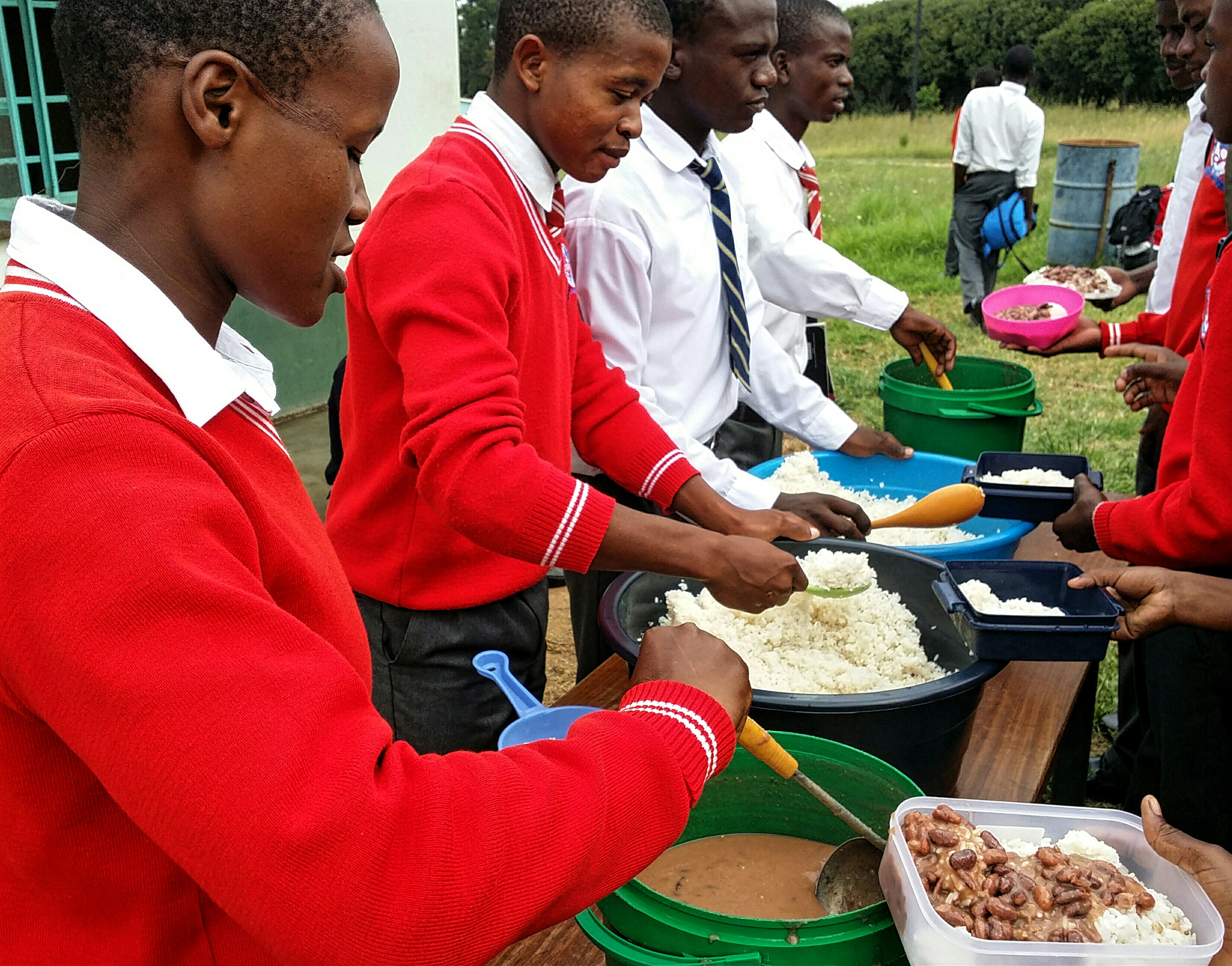
The schools in Swaziland serve lunch every school day. The daily menu is minimally varied. Some days, the students are treated to soupy beans with rice. On other days, the afternoon delight is non-soupy beans with rice. 

School lunch costs are included in the annual school fees assessed to secondary school students. All primary school students and some secondary school students are fully funded by government. 

At lunch time, students line up outside of the kitchen with her/his dish and eating utensil. Four or five older students are responsible for serving their classmates. They set up a table with at least two basins filled with rice and at least two basins or buckets filled with beans. After being served, students sit around the school grounds while enjoying lunch. Students can supplement their lunch with snacks from the bomake market. 

Be kind to yourself. 
Onward. 

Ever wonder what is Kirby doing? Follow the blog!

Monday in a Picture – Inspiration from Mother and others

​Everyday before I leave my house, this is what I see. It’s important to stay motivated and inspired while serving. People have sent postcards, greeting cards, and letters from all over the world during my time in Swaziland. I’m extremely grateful to all of those who have taken the time to write kind words and send them to me. 

To make my house feel more homey, I added pictures of those responsible for my being to the inspiration wall. They include my great grandfather, his daughter (my grandmother), and her daughter (my mother). It was on this day seven years ago that my mother passed away. She’s actually (partially) responsible for my serving in the Peace Corps. She pushed us to serve others with compassion. She instilled a sense of exploration. She made sure that we respected and embraced those who might be different from us.

Having these visual reminders has been great for keeping me motivated in the rural community. It makes my service feel a little less lonely. 

Be kind to yourself. 
Onward. 

Ever wonder what is Kirby doing? Follow the blog!

Monday in a Picture – School Assembly 

I spend most of my time at the high school. There are classes to be taught and conversations to be had. In addition, I genuinely enjoy being at the school. The students are engaging while challenging me to speak more siSwati. Fellow teachers bounce ideas around with me, and also encourage me to speak more siSwati. 

Most days, the school day begins and ends with an assembly. When the bell rings, all students come together and stand in line with their respective grade level. A teacher or administrator stands in front to lead the learners through the assembly. 

One of the older students will start to sing a song. The other students join in the singing at appropriate times. After the song, the students will recite a prayer. The song is always in siSwati or isiZulu. The prayers and prayer languages vary, and are sometimes recited in English. After the prayer, the staff person facilitating the assembly will say “good morning/afternoon, students”. In unison, the students reply “good morning/afternoon sir/ma’am. Good morning/afternoon teachers. Good morning/afternoon sisters. Good morning/afternoon brothers.” At this point in the assembly, staff make any announcements pertaining to the students (i.e., remind your parents about the meeting tomorrow, etc.) The assembly ends after announcements are made, and students go either to class or home. 

The above picture is of the students lined up for afternoon assembly at the high school. 

Be kind to yourself. 
Onward.

Ever wonder what is Kirby doing? Follow the blog!

Monday in a Picture – Cutting Grass

It was the summer of 2006. This was the summer before my senior year of college, and I was spending it with my uncle and his family in Fayette County, Georgia. All of the single family homes seemed to have perfectly manicured lawns. There wasn’t a blade of grass out of place. On one Saturday morning, my cousin, uncle, and I got up early. It was time to cut the grass at our house. 

This was a new experience for me. I had never cut grass, or done any yard work. My cousin and uncle taught me how to start and use the gas powered lawnmower. It was hard work. I wasn’t able to achieve that perfectly manicured look that I saw at the neighbors’ homes, but I got the job done. 

Almost eleven years later, I am responsible for maintaining the grassy area around my home on the homestead. My host mom reminds me of this when my grass grows too high. She warns me that high grass gives snakes places to hide. 

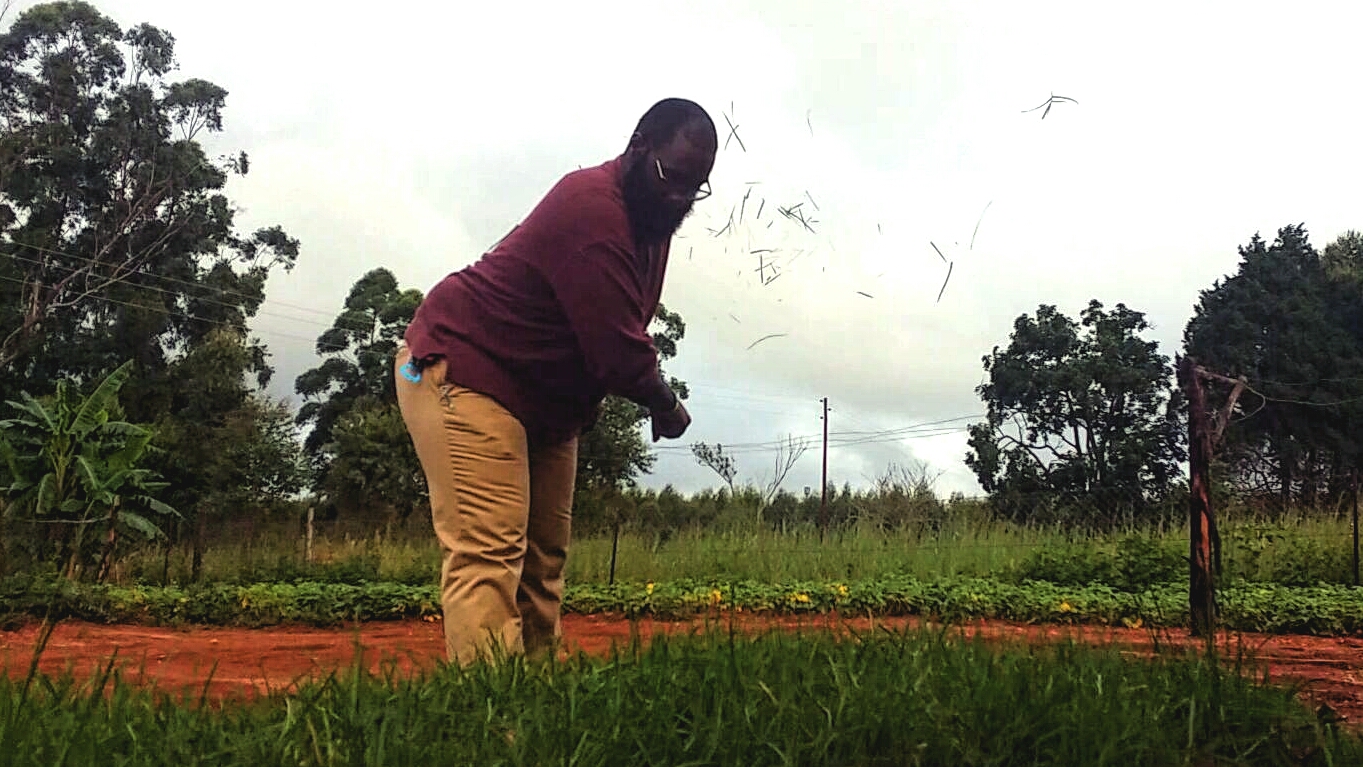
Lawnmowers are a rarity in Swaziland. They are practically non-existent in the rural community. There are two options for cutting grass. There’s an older pair of garden shears, and there’s something called a siheshe (pronounced see-heh-shay), or slasher. It’s smaller than a bush knife and has a modest handle with a thin, long metal blade. When my host brother was home for the Christmas holidays, I saw him using the siheshe to cut grass. I asked him how one cut grass with it. He responded simply, “just beat the hell out of it”. I remembered that on one weekday afternoon as I attempted to cut my grass, Swazi style. Eventually, I found a rhythm. I also found a new appreciation for lawnmowers. The slasher gets the job done and gives you a workout. Luckily, I only have to cut the grass twice a month. 

Be kind to yourself. 
Onward. 

Follow What is Kirby Doing? on WordPress.com

Getting naked in Cape Town (SFW)

It was Sunday evening. I had returned to Swaziland to attend training. I was on cloud nine after having the most amazing weekend in Cape Town. I had started the weekend with two goals. Eat great food and ride bikes while naked. Cape Town is known for some exquisite cuisine. The World Naked Bike Ride happened to be on the same weekend. Both of my goals were exceedingly accomplished! I ate amazing Thai food and sushi. Other PCVs at the training commented on how refreshed I looked as I shared highlights of the weekend. I smiled. I was extremely rejuvenated. 

One PCV friend asked when I would be writing about this experience on my blog. I responded that I wouldn’t be writing about the naked bike ride weekend. I had reasoned that the weekend was not related to my Peace Corps service, and that this blog was singularly about my service. I had reasoned that I wanted to be a “good” volunteer, and not attract bad publicity or attention to the Peace Corps. 

The World Naked Bike Ride (WNBR) is a clothing optional bike ride that takes place in more than 70 cities around the world. People from all walks of life join in to celebrate people powered transportation. Most ride bikes. Some ride longboards. Some participate in roller skates. Others choose to run. 

The reasons that people choose to participate, like the participants themselves, are diverse. Some people want to bring attention to our global dependence on non-renewable energy. Others want to highlight the vulnerability of cyclists and remind motorists to share the road. There are naturists, and naturism activists, who use the ride to promote a clothes-free lifestyle and remind the world that nakedness does not equal sex or lewd behavior. 

My first WNBR was 2012 in Philadelphia. A big reason for my participation, at the time, was to be part of an exciting counter-culture. It was thrilling to be around 2500 people in various states of undress. 

To date, I have done the WNBR in six cities on three continents. While it’s still exciting to be naked and ride bikes through the city, I have added to the reasons that I ride. Having struggled with body image issues at various points in my life, I try to fully embrace body positivity, both in practice and thinking. People with all kinds of body types participate in the ride, and all are welcomed and embraced by fellow ride participants and most onlookers. Cape Town was no different. As we rode through the city, people lined the streets to cheer for us. The smiles were plenty. The weather was perfect. I was even gifted some delicious pizza after the 7.5 km ride. I even posed for pictures, and completed some interviews (one of which ended up on Japanese news). Body shaming has been normalized and is commonplace in far too many places. Simply stated, I ride because I refuse to embrace a culture of shame. 

After much internal debate on whether or not I should write about my experience at the Cape Town WNBR, I decided that it was necessary. Yes, this is a blog about my Peace Corps experience. However, that experience isn’t limited to teaching classes, building gardens, and writing grants. Also, I believe in the importance of fully representing the great expanse known as the US of A. Some day, someone will read this while wondering if there is space in Peace Corps for them with all of their unique intricacies. Let this post be a resounding yes! 

Be kind to yourself. 
Onward. 

Follow What is Kirby Doing? on WordPress.com

So, what exactly do you do? – a day in the life of a Peace Corps Swaziland volunteer extraordinaire

This question gets asked by many people. Community members and other Swazis are interested. Friends and family in America want to know. Friends that I haven’t met yet are curious. Of course, potential Peace Corps volunteers want a glimpse into what is potentially ahead of them. 

For starters, I’m a Youth Development volunteer in Swaziland. Unlike some Peace Corps sectors, like Education, we don’t have a preset schedule. We also don’t have a specific job description. We are given the opportunity to make our own daily itinerary and work within our framework. In Swaziland, we aren’t assigned to work with a particular organization or person. We’re assigned to an entire rural community. 

Though the days vary, I would like to present what a typical day for myself is like. 

I wake up between 0530 and 0630 during the week, and sometimes on weekends. I boil a kettle of water (to shower) while I do other morning tasks. After showering, I make breakfast (typically oatmeal with cinnamon and brown sugar) and get dressed. 

I try to leave my house by 0700, if I’m going to walk to the high school. I can leave at 0710 if I am going to bike. The school is just under two kilometers from my homestead. At school, I teach life skills. The school administration has also given me some class periods to teach “youth development”. While there is a full grade-specific curriculum for the life skills classes from the Ministry of Education, the youth development time is up to me and my creativity. 

I have taught lessons on resiliency, confidence, and leadership from various curriculums floating around Peace Corps. I have lead the students on team building and trust exercises. We tried to play some improv games, but that wasn’t successful. We have played a life skills board game designed by some PCVs who came before my time. I have discussed debatable topics before having students take positions and debate in class. There are also times when the students have vast questions about America. Being the resident American, I get to answer these questions. Sometimes, these question and answer sessions will last for an entire period. 

When I’m not teaching (which is often), I hang out in the staff workroom. Sometimes, I’m chatting with other teachers and trying to pick up more siSwati, or discussing life and ideas. Most times, I’m reading a book on the kindle. I bring my lunch to school everyday. It’s almost always leftovers from whatever I made the previous evening. I should mention that there are many impromptu conversations with students, teachers, administration and other community members that happen regarding possible activities, projects, and grants. Some of it pans out. Some of it doesn’t. Impromptu conversation is partly responsible for me teaching a class.

School dismisses at 1535. After school, I ride or walk home. I change into some kind of lounge wear and sit on my porch or go for a late afternoon bike ride. I’ll typically try to find my host mom to greet her, especially if I didn’t see her in the morning. Sometimes, neighbors or friends will stop by to chat. Sometimes, I read a book until the sun sets. This is also when I do my chores, like watering and weeding my garden, sweeping my house and porch, cutting grass or washing dishes. 

Around 1800, I start the process of cooking dinner. I am often distracted by a television show or movie, so I usually end up eating around 1900. After eating dinner and finishing whatever I’m watching, it’s time to go to bed (which is typically between 2030 and 2100). 

There are other things sprinkled in throughout the day. For example, I might hang out on Instagram looking for bearded PCVs to feature on @BeardsOfPeaceCorps. Sometimes, I’m asked to co-teach a class that relates to my interests, like economics or technology. My students have taught me how to play various card games. I’ve also led permagardening trainings in the community. In the interest of transparency, there are some days that I do nothing and thoroughly enjoy it. 

It is both daunting and freeing to be able to do whatever you want (within reason). You want to introduce baseball or ultimate frisbee? Go for it. You want to trick children into analyzing English by studying and listening to the music of Drake and Jay Z? Why not! I’m fortunate to be hosted by a community open to trying new ideas. Thankfully, most days are incredibly freeing. 

Be kind to yourself.
Onward.

Follow What is Kirby Doing? on WordPress.com