​Monday In A Picture – For Colored Girls Who Reply “Pilot” When Asked, “What Do You Want To Be When You Grow Up?” 

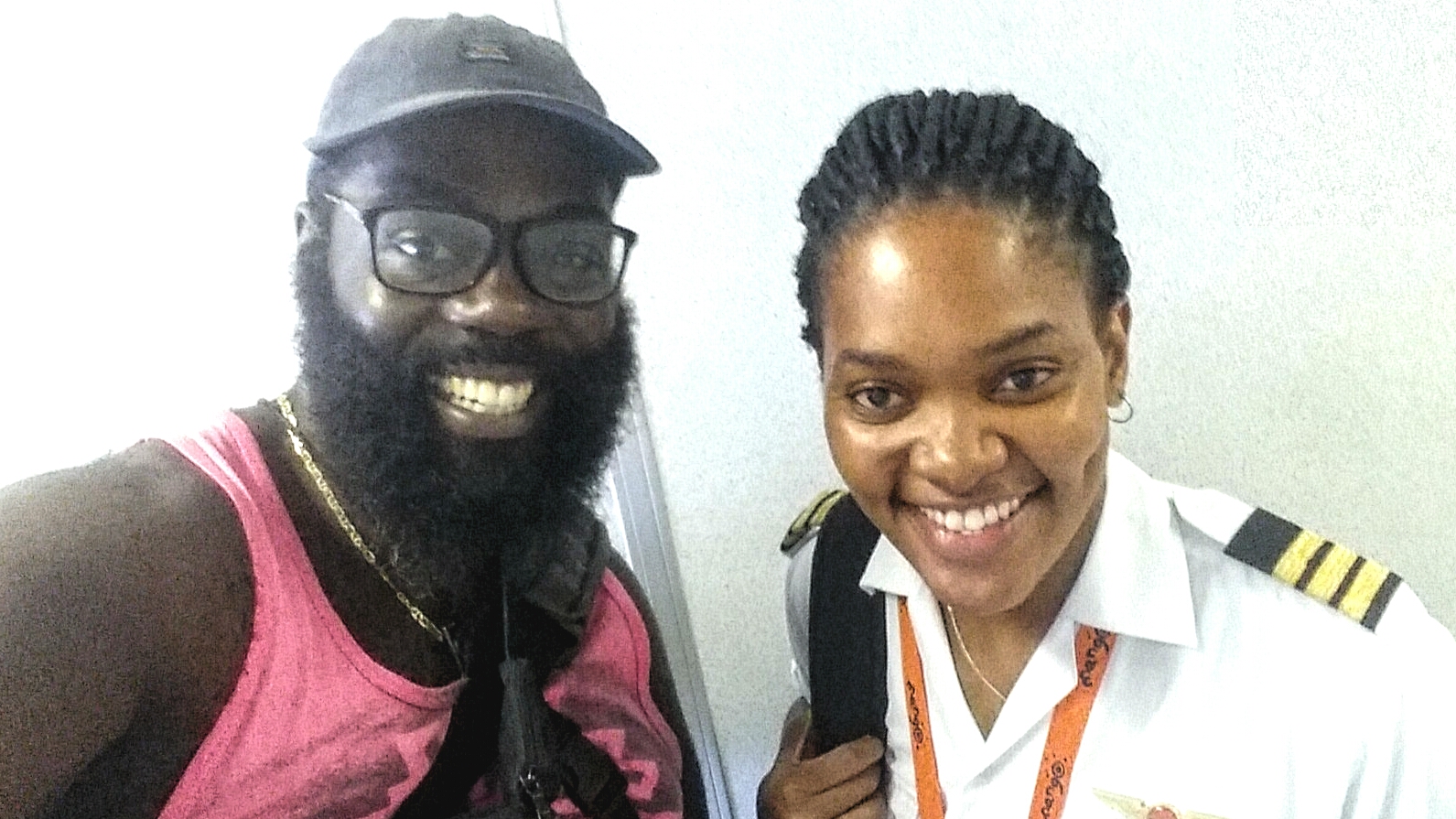
Yesterday, it happened again. For the second time in my life, I met a Black woman pilot. I had left the plane and was walking up the jet bridge when I saw her. I noticed the bars on her shoulders, so I walked up to the young lady and asked if she was a first officer. She confirmed that she was. 

Nandi is a South African woman who currently flies as a first officer with Mango Airlines, based in South Africa. She stopped to chat with me for brief moment. I told her how excited I was to meet her, and the hope and promise that she gives me for the future. This is especially true now in my role as a teacher at my community’s high school. 

As a American man serving in the kingdom of Swaziland, I am increasingly aware of the privileges that I have through no merit of my own. One of the privileges benefiting me, as a man, is the fact that I get to see men in all kinds of positions throughout society. As a result, it’s rarely a question of whether I can attain a certain achievement. I have countless examples surrounding me as a man. As a Black man, I have fewer, but still numerous, examples around me. 

All of this brings me back to Nandi and my role as a teacher. I see teachers (myself included) as not only being responsible for teaching, but for inspiring their students. I want all of my students to truly believe that they can do anything. I believe that seeing examples who are relatable to our identities is important.

A Black woman gave birth to me. Black women, from various sectors in society, have been instrumental in my life. I noticed some years ago that Black women weren’t just underrepresented in the cockpit. They were non-existent. In more than 20 years of flying, I had never encountered a Black woman pilot in real life. So, I made it a travel goal of mine to meet one Black woman pilot. This task grew more daunting as I spoke with my uncle who retired from Delta Airlines after more than twenty-five years of service. He informed me that he had only met one Black woman pilot in years of extensive work and leisure travel around the world. 

In September 2014, I met Gabrielle in San Francisco. Gabrielle is a first officer with United Airlines. Yesterday, I met Nandi in Johannesburg. During this month celebrating women’s history, I want to make sure that Black and brown girls around Swaziland, Africa, and the world know that there are amazing women like Gabrielle and Nandi shattering glass ceilings and blazing trails for you. 

Be kind to yourself. 
Onward. 

Follow What is Kirby Doing? on WordPress.com

So, what exactly do you do? – a day in the life of a Peace Corps Swaziland volunteer extraordinaire

This question gets asked by many people. Community members and other Swazis are interested. Friends and family in America want to know. Friends that I haven’t met yet are curious. Of course, potential Peace Corps volunteers want a glimpse into what is potentially ahead of them. 

For starters, I’m a Youth Development volunteer in Swaziland. Unlike some Peace Corps sectors, like Education, we don’t have a preset schedule. We also don’t have a specific job description. We are given the opportunity to make our own daily itinerary and work within our framework. In Swaziland, we aren’t assigned to work with a particular organization or person. We’re assigned to an entire rural community. 

Though the days vary, I would like to present what a typical day for myself is like. 

I wake up between 0530 and 0630 during the week, and sometimes on weekends. I boil a kettle of water (to shower) while I do other morning tasks. After showering, I make breakfast (typically oatmeal with cinnamon and brown sugar) and get dressed. 

I try to leave my house by 0700, if I’m going to walk to the high school. I can leave at 0710 if I am going to bike. The school is just under two kilometers from my homestead. At school, I teach life skills. The school administration has also given me some class periods to teach “youth development”. While there is a full grade-specific curriculum for the life skills classes from the Ministry of Education, the youth development time is up to me and my creativity. 

I have taught lessons on resiliency, confidence, and leadership from various curriculums floating around Peace Corps. I have lead the students on team building and trust exercises. We tried to play some improv games, but that wasn’t successful. We have played a life skills board game designed by some PCVs who came before my time. I have discussed debatable topics before having students take positions and debate in class. There are also times when the students have vast questions about America. Being the resident American, I get to answer these questions. Sometimes, these question and answer sessions will last for an entire period. 

When I’m not teaching (which is often), I hang out in the staff workroom. Sometimes, I’m chatting with other teachers and trying to pick up more siSwati, or discussing life and ideas. Most times, I’m reading a book on the kindle. I bring my lunch to school everyday. It’s almost always leftovers from whatever I made the previous evening. I should mention that there are many impromptu conversations with students, teachers, administration and other community members that happen regarding possible activities, projects, and grants. Some of it pans out. Some of it doesn’t. Impromptu conversation is partly responsible for me teaching a class.

School dismisses at 1535. After school, I ride or walk home. I change into some kind of lounge wear and sit on my porch or go for a late afternoon bike ride. I’ll typically try to find my host mom to greet her, especially if I didn’t see her in the morning. Sometimes, neighbors or friends will stop by to chat. Sometimes, I read a book until the sun sets. This is also when I do my chores, like watering and weeding my garden, sweeping my house and porch, cutting grass or washing dishes. 

Around 1800, I start the process of cooking dinner. I am often distracted by a television show or movie, so I usually end up eating around 1900. After eating dinner and finishing whatever I’m watching, it’s time to go to bed (which is typically between 2030 and 2100). 

There are other things sprinkled in throughout the day. For example, I might hang out on Instagram looking for bearded PCVs to feature on @BeardsOfPeaceCorps. Sometimes, I’m asked to co-teach a class that relates to my interests, like economics or technology. My students have taught me how to play various card games. I’ve also led permagardening trainings in the community. In the interest of transparency, there are some days that I do nothing and thoroughly enjoy it. 

It is both daunting and freeing to be able to do whatever you want (within reason). You want to introduce baseball or ultimate frisbee? Go for it. You want to trick children into analyzing English by studying and listening to the music of Drake and Jay Z? Why not! I’m fortunate to be hosted by a community open to trying new ideas. Thankfully, most days are incredibly freeing. 

Be kind to yourself.
Onward.

Follow What is Kirby Doing? on WordPress.com

Monday in a Picture – Water from Jojo

Some weeks ago, we experienced the effects of Cyclone Dineo. It brought high winds and an abundance of rain. For a week, rain muddied the roads while rain clouds hid the sun. As a rookie gardener, I have learned to appreciate the rain for what it does to my garden. Swaziland, as a whole, appreciates the rain as southern Africa recovers from a severe drought. 

Water is necessary regardless of where you live. Across the kingdom, different families get water in different ways. Some families have indoor plumbing with running water. Some families take water cans to the river, and fill them before returning home. In some communities, there is a community tap which typically pulls water from a rain caching reservoir. On some homesteads, you find a borehole which extracts water from the ground. I have also seen families divert streams or rivers to deliver water to the homestead. 

On my homestead, we are fortunate to have a jojo tank. The jojo tank sits on a large concrete slab, and has one tap at the bottom. The jojo tank is connected to rain gutters leading into to the jojo tank. Our jojo tank has a capacity of about 5000 liters. When the rains come, the jojo tank fills with water and all is well. When the rains don’t come, there are services that can come out and fill your jojo tank. Our jojo tank provides all of the water used for drinking, cooking, gardening, cleaning, and bathing. I also use the jojo tank to wash my hands after using the pit latrine. 

To get water in my house, I fill a 25 liter water can (as seen in the picture above) to bring inside. Because water access isn’t as simple as turning on a faucet in the kitchen or bathroom, I’m more cognizant of my water usage. I try to conserve water. Now, I can happily add “showering with 5 liters of water” to my skill set. 

Be kind to yourself. 
Onward. 

Follow What is Kirby Doing? on WordPress.com

Sweet Dreams – Obama girl

Because I am posted in a country where I might contract malaria, I have been given an antimalarial medication called, “Mefloquine”. One of the side effects of this medication is lucid dreaming. The following is what I dreamt last night (as best I can remember). 

​I was discussing something on Twitter. I was engaging with followers and whatnot. I was also coming back from a trip. I was coming back to DC. I had mentioned this on my Twitter. Anyway, a day or so after I arrived in DC, a follower contacts me to talk about the topic I was discussing with my followers earlier. We engage in a dialogue and decide to meet up since we’re both in DC at the time. 

I meet a young lady. She’s in her late teens or early twenties. We meet by the White House. It’s Obama’s daughter. (In this dream, the Obamas only have one daughter, and she looks like a mixture of Malia and Sasha.) We start chatting. She asks if I have ever been in the White House. I say that I haven’t. She invites me in.

The first thing I notice is that there is a massive bathroom. I think to myself that I should really ask to use the bathroom as it’ll probably be the most luxurious bathroom I ever have a chance to use. I don’t ask because I’m so excited that I don’t even have to go to the bathroom. Me and Obama girl are talking about life, and whatever we were discussing on Twitter as she gives me an impromptu tour of the White House. I’m only engaging partly because I’m so excited to be in the White House, and that the president’s daughter follows me on Twitter. Apparently, I’m too excited to even take pictures. We get to the museum part of the White House and I ask Obama girl if she’ll take a picture of me with a bust of Obama. She agrees. It’s the only picture I have from the visit and the occasion. 

Later that evening, or the next day, I’m sitting in a car with my mother and brother. I’m explaining to them what happened my brother is in disbelief and telling me all of the reasons that it couldn’t have happened. My mother is listening and supportive. But I’m not sure she knows what Twitter is. I look up and we’re sitting outside of my grandmother’s house in NW DC. 

Be kind to yourself.
Onward.

Follow What is Kirby Doing? on WordPress.com

Monday in a Picture – The Kraal

Over the course of several weeks, I have featured my homestead and pit latrine. Another integral part of the Swazi homestead dynamic and structure is the kraal (pronounced crawl). The kraal is where a family’s cattle are kept. The kraal is also a symbol in signifying that family’s wealth.

In rural communities, personal bank accounts are less common. It’s not that the money isn’t there. The money takes on a different form. Cows are money. A family with a lot of cows is considered a wealthy family. Some families also invest in cows. When baby calves are born, wealth is increased.

Cows are very much intertwined into Swazi culture. If I want to build a home for myself and my family in a rural community, I am expected to give a certain number of cows to the umphakatsi (pronounced oom-pa-got-see), or local community leadership. If I want to marry, I must pay lobola (low-bow-la), or bride price, to the bride’s family. The lobola is traditionally negotiated between the families, and paid in cattle. For major events in a family or community, a cow may be slaughtered in honor of the occasion.

The cows are released from the kraal daily and taken to graze by a cattle herder. Amazingly, the cows know exactly where their respective kraal is and the cattle herder knows exactly which cows belong in that kraal.

In addition to wealth and food, the kraal also provides plenty of cow manure for to be used as fertilizer during ploughing and planting season.

Be kind to yourself.
Onward.

Follow What is Kirby Doing? on WordPress.com

From the @whatisKirbydoing Instagram: February 22, 2017 at 11:24AM

It’s been raining for the past week. That means muddy gravel roads and bridges under water. It also means #wildflowers get nourished and add brilliant color to gray days. Lastly, it means that I actually googled “African violet” and learned that this isn’t it.

#HowiSeePC #PeaceCorps #Swaziland #Africa #Nature #PCV

​Monday in a Picture – My Pit Latrine 

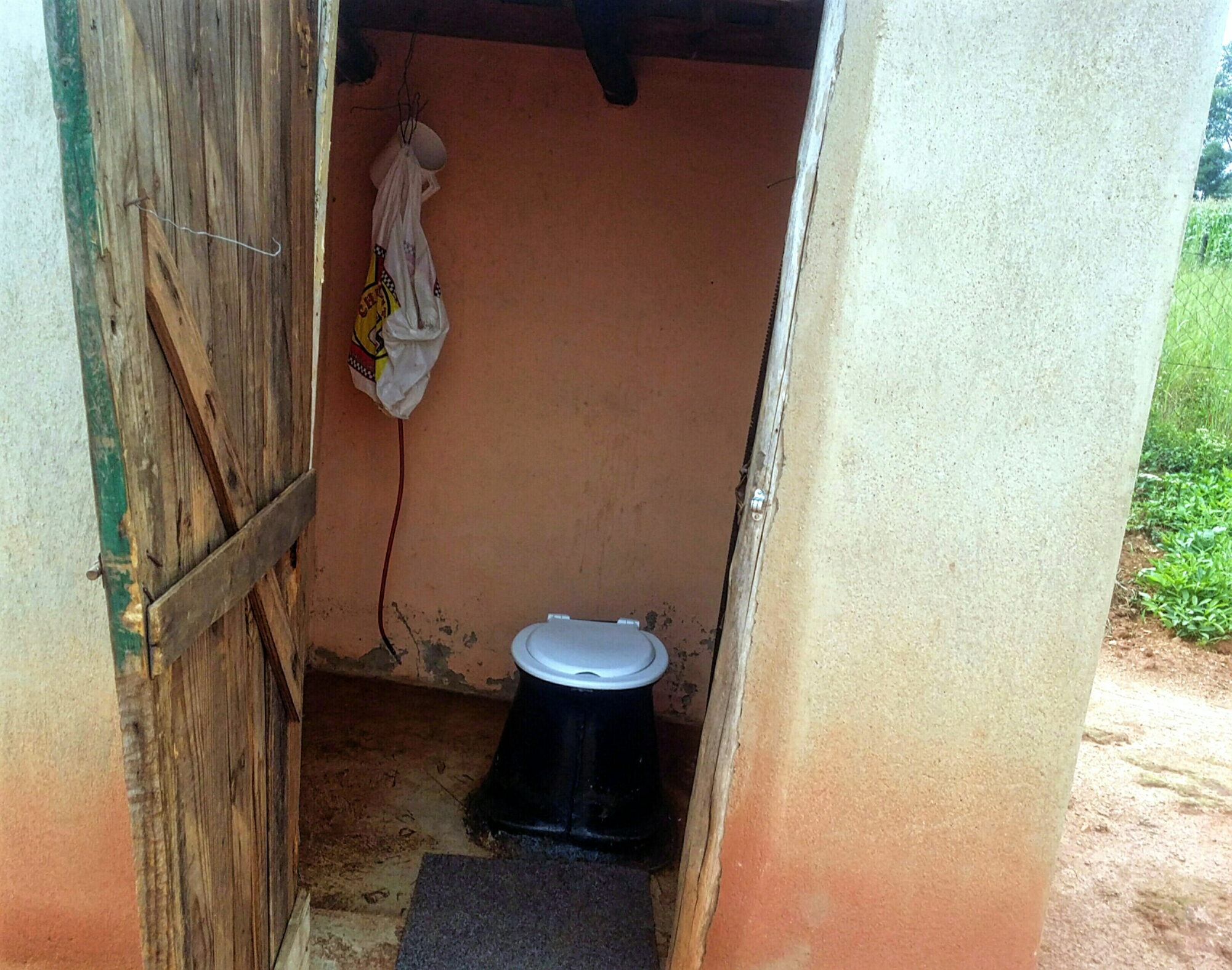
I thought about titling this, “My Poopy Place”. Alas, I resisted. Everyone poops. As such, everyone needs some a method and a place to relieve themselves of fecal matter. While some rural homesteads and urban businesses have bathrooms furnished with flushing toilets, many of the homesteads in my community utilize some kind of pit latrine when handling bathroom business. My homestead falls into this category. The above picture is our pit latrine. 

There’s a toilet-like structure that sits over a very large deep hole (pit). All of the waste goes into that hole. Around the toilet-like structure, there are four walls (including one with a door). In my latrine, I have enough space to sit comfortably while handling my business. The door’s lock is a wire that wraps around a nail on the door frame. My latrine also has a ventilation pipe to help mitigate the smell of decomposing waste. 

I’ve never seen a latrine filled. However, I’ve been told that the latrine is considered full when the waste is between 1.5 and 2 meters away from the top of the hole. After a latrine is full, a tree of some variety is planted in that space as the space is now very fertile. Another hole will be dug so that there can still be a place for using the toilet. 

Because there is no light in my latrine, I tend not to use the latrine after dark. I’ve heard stories of crafty, stealthy creatures biting butts in the dark. While I realize that my concern is probably irrational and could be alleviated with a headlamp, I’ll stick to the safety of my pee bucket. 

Be kind to yourself. 
Onward. 

P.S. – Here’s a picture of the inside of my latrine. 

Follow What is Kirby Doing? on WordPress.com

Monday in a Picture – Marula and Buganu

This past weekend, Swazis and friends in the northern region of the country celebrated the marula festival. The festival celebrates the harvest of the marula fruit, its resiliency, and the resiliency that it symbolizes for all of Swaziland. The tree produces delicious fruit, even in drought stricken summers. The festival happens at one of the royal residences, and the king and queen mother attend along with hundreds of Swazis. 

Swazis celebrate the marula fruit by home brewing buganu (pronounced boo-ga-new), which is a beer made from the fruit. One PCV, who lives in northern Swaziland, agreed (with his host family) to host a number of PCVs so that we could experience the fruit, the beer, and the festival. He and his host family spent considerable time brewing many liters of buganu for this weekend. The inner council of the community leadership came to his homestead to sit and share buganu with the volunteers. They talked about the fruit and beer before explaining how the beer is made. Then, there was a live, hands-on tutorial of home brewing buganu. The picture above is of the hosting host mom preparing to start the buganu brewing process. 

The fruit is removed from its skin, and placed in clean water. After three days, the seeds are removed from the fruit. Then, the mixture sits for another day. At this point, the beer is ready to be enjoyed. We learned that women typically brew the buganu for her husband and the family. Some women also sell buganu. A 25 liter container sells for between 50 and 100 emalangeni (pronounced emma-lan-gay-knee), which is the currency of Swaziland (on par with the South African rand). 

There will be another marula festival in a few weeks in a different region of the country. This is due to the marula fruit ripening at different times in different parts of the country. We learned that the fruit is not to be picked from the tree, as it is not yet ripe. The fruit should be picked up from the ground once it has fallen. 

Be kind to yourself. 
Onward. 

Follow What is Kirby Doing? on WordPress.com