Monday in a Picture – The Kraal

Over the course of several weeks, I have featured my homestead and pit latrine. Another integral part of the Swazi homestead dynamic and structure is the kraal (pronounced crawl). The kraal is where a family’s cattle are kept. The kraal is also a symbol in signifying that family’s wealth.

In rural communities, personal bank accounts are less common. It’s not that the money isn’t there. The money takes on a different form. Cows are money. A family with a lot of cows is considered a wealthy family. Some families also invest in cows. When baby calves are born, wealth is increased.

Cows are very much intertwined into Swazi culture. If I want to build a home for myself and my family in a rural community, I am expected to give a certain number of cows to the umphakatsi (pronounced oom-pa-got-see), or local community leadership. If I want to marry, I must pay lobola (low-bow-la), or bride price, to the bride’s family. The lobola is traditionally negotiated between the families, and paid in cattle. For major events in a family or community, a cow may be slaughtered in honor of the occasion.

The cows are released from the kraal daily and taken to graze by a cattle herder. Amazingly, the cows know exactly where their respective kraal is and the cattle herder knows exactly which cows belong in that kraal.

In addition to wealth and food, the kraal also provides plenty of cow manure for to be used as fertilizer during ploughing and planting season.

Be kind to yourself.
Onward.

Follow What is Kirby Doing? on WordPress.com

From the @whatisKirbydoing Instagram: February 22, 2017 at 11:24AM

It’s been raining for the past week. That means muddy gravel roads and bridges under water. It also means #wildflowers get nourished and add brilliant color to gray days. Lastly, it means that I actually googled “African violet” and learned that this isn’t it.

#HowiSeePC #PeaceCorps #Swaziland #Africa #Nature #PCV

​Monday in a Picture – My Pit Latrine 

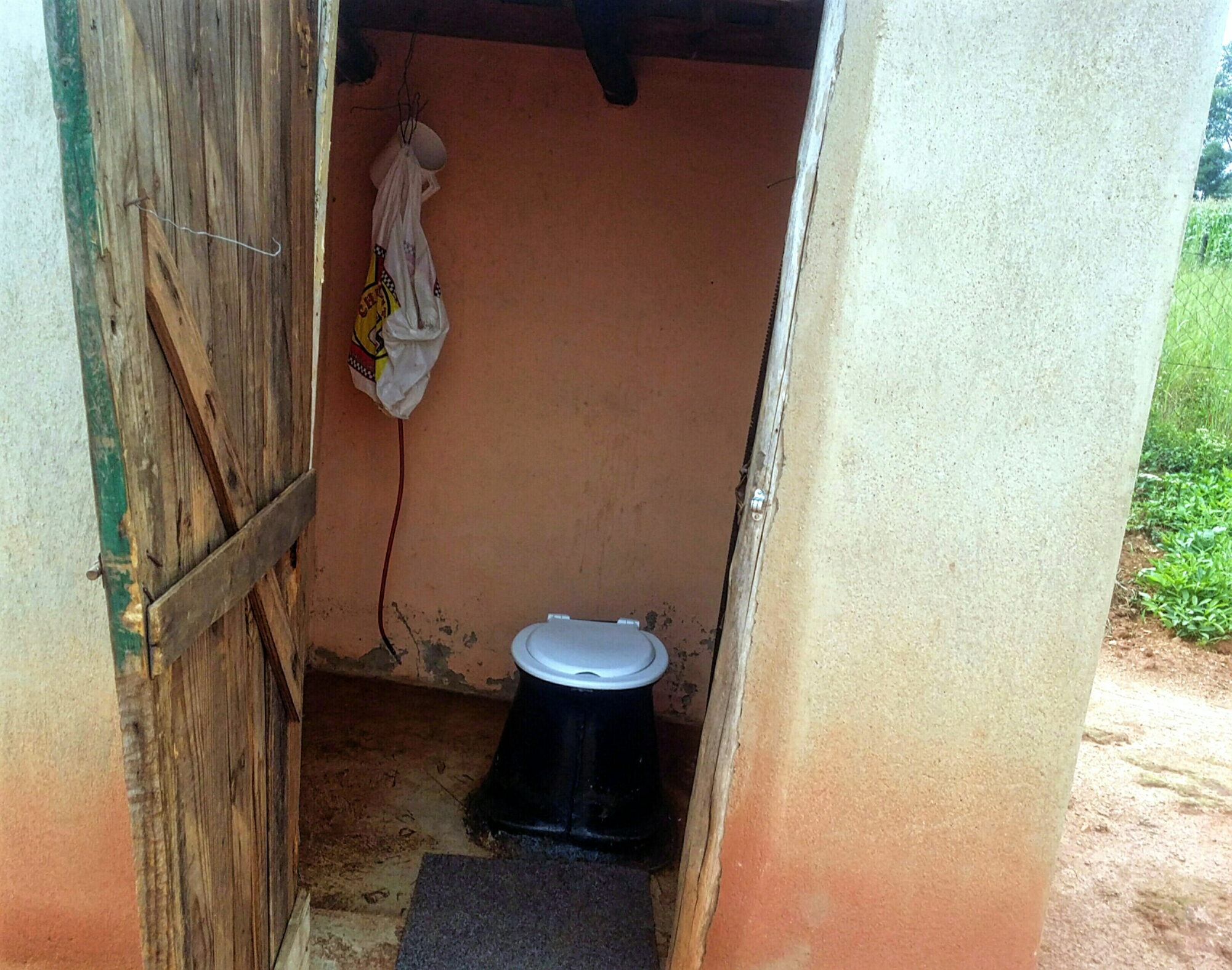
I thought about titling this, “My Poopy Place”. Alas, I resisted. Everyone poops. As such, everyone needs some a method and a place to relieve themselves of fecal matter. While some rural homesteads and urban businesses have bathrooms furnished with flushing toilets, many of the homesteads in my community utilize some kind of pit latrine when handling bathroom business. My homestead falls into this category. The above picture is our pit latrine. 

There’s a toilet-like structure that sits over a very large deep hole (pit). All of the waste goes into that hole. Around the toilet-like structure, there are four walls (including one with a door). In my latrine, I have enough space to sit comfortably while handling my business. The door’s lock is a wire that wraps around a nail on the door frame. My latrine also has a ventilation pipe to help mitigate the smell of decomposing waste. 

I’ve never seen a latrine filled. However, I’ve been told that the latrine is considered full when the waste is between 1.5 and 2 meters away from the top of the hole. After a latrine is full, a tree of some variety is planted in that space as the space is now very fertile. Another hole will be dug so that there can still be a place for using the toilet. 

Because there is no light in my latrine, I tend not to use the latrine after dark. I’ve heard stories of crafty, stealthy creatures biting butts in the dark. While I realize that my concern is probably irrational and could be alleviated with a headlamp, I’ll stick to the safety of my pee bucket. 

Be kind to yourself. 
Onward. 

P.S. – Here’s a picture of the inside of my latrine. 

Follow What is Kirby Doing? on WordPress.com

Monday in a Picture – Marula and Buganu

This past weekend, Swazis and friends in the northern region of the country celebrated the marula festival. The festival celebrates the harvest of the marula fruit, its resiliency, and the resiliency that it symbolizes for all of Swaziland. The tree produces delicious fruit, even in drought stricken summers. The festival happens at one of the royal residences, and the king and queen mother attend along with hundreds of Swazis. 

Swazis celebrate the marula fruit by home brewing buganu (pronounced boo-ga-new), which is a beer made from the fruit. One PCV, who lives in northern Swaziland, agreed (with his host family) to host a number of PCVs so that we could experience the fruit, the beer, and the festival. He and his host family spent considerable time brewing many liters of buganu for this weekend. The inner council of the community leadership came to his homestead to sit and share buganu with the volunteers. They talked about the fruit and beer before explaining how the beer is made. Then, there was a live, hands-on tutorial of home brewing buganu. The picture above is of the hosting host mom preparing to start the buganu brewing process. 

The fruit is removed from its skin, and placed in clean water. After three days, the seeds are removed from the fruit. Then, the mixture sits for another day. At this point, the beer is ready to be enjoyed. We learned that women typically brew the buganu for her husband and the family. Some women also sell buganu. A 25 liter container sells for between 50 and 100 emalangeni (pronounced emma-lan-gay-knee), which is the currency of Swaziland (on par with the South African rand). 

There will be another marula festival in a few weeks in a different region of the country. This is due to the marula fruit ripening at different times in different parts of the country. We learned that the fruit is not to be picked from the tree, as it is not yet ripe. The fruit should be picked up from the ground once it has fallen. 

Be kind to yourself. 
Onward. 

Follow What is Kirby Doing? on WordPress.com

​Everyone has a part of the story 

During our first three months in Swaziland, we had all kinds of training. There was technical training and language training. There was training about the history and culture of Swaziland. There was probably more training that I have since forgotten. 
One of the things that I haven’t forgotten is a session in which we watched Chimamanda Ngozi Adichie’s TED talk about the danger of a single story

My story is, indeed, a single story. It is one of many. A single, personal view of a complex world. During this session, our training manager advised us not to perpetuate the single story of Africa being a singular, homogenous experience, culture, and people. After all, Swaziland is only a piece of Africa. And even in the kingdom of Swaziland, there are varied cultures and experiences among 1.2 million Swazis. In the spirit of promoting multiple varied stories and viewpoints, I would like to share some of my favorite blog posts from PCVs around the globe. 

This post was inspired by Nicole, also in Swaziland, who also wrote about the danger of a single story. I have been inspired by Alexa discussing the gifts from the garden in Uganda. Alison captured the magic and mystery of Swazi greetings and praise names. There is Abbie’s insightful look into things that are uniquely Moroccan. Ally listed common phrases that are heard throughout Swaziland, but would be unusual in America. I read about April’s language challenges in Kosovo, and was comforted by a shared struggle. Recently, Nate explored what the first day of school looks like in Swaziland. Nathalie shared the things that she’s learned in her first six months as a PCV in Swaziland. Faith, in Tanzania, compiled many memes about serving as a volunteer of color

Feel free to link to some of your favorite PCV blog posts in the comments.

Be kind to yourself. 
Onward. 

Follow What is Kirby Doing? on WordPress.com

​Monday in a Picture – The Homestead 

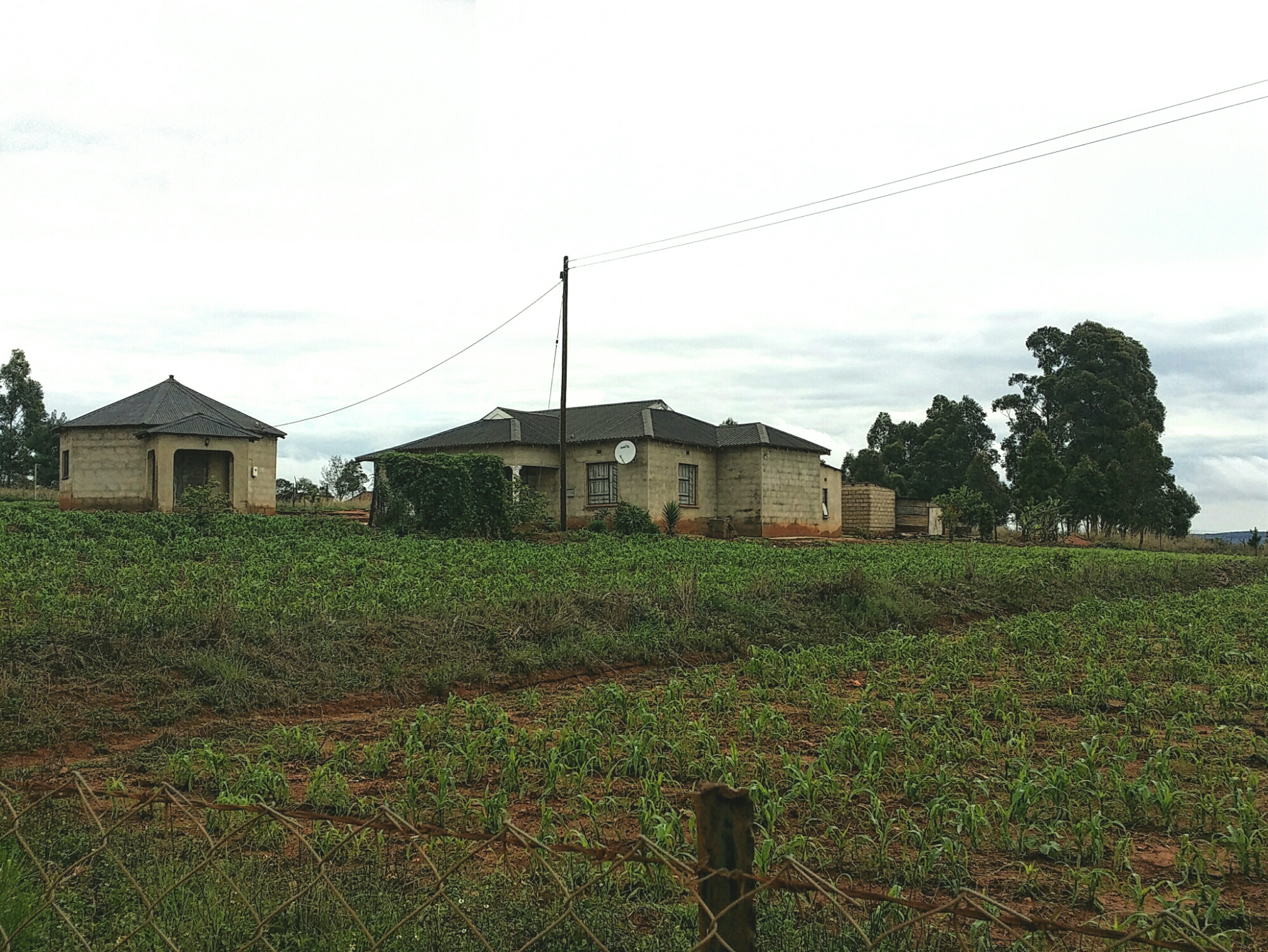
In Swaziland, we live with a host family in a rural community for the duration of our service. These communities tend to be very family oriented. Families live together on a plot of land called a homestead. Homesteads vary greatly in size, structures, and composition. There are some common elements with all homesteads around the country. 

I have yet to see a homestead that doesn’t have a farming space to grow crops, typically maize. Most homesteads have multiple buildings on them. On my homestead (pictured above), there’s the main house, my house, a tool house, a chicken house, a guest room, and a pit latrine. Many homesteads also have a kraal (pronounced crawl), which is where the family’s cows live. Some homesteads with many extended family members may have one house for school age female children, and another house for school age male children. Some homesteads have a kitchen house, where food is cooked in a large three legged pot over an open fire. 

There is, of course, a process to acquiring land to build your homestead. It starts with going to the inner council at the umphakatsi (pronounced om-pa-got-see) to ask for land to build your home. The umphakatsi is the local governance structure of a chiefdom. In many rural communities and chiefdoms, only a married man can ask the inner council for land to build a home. It’s expected that you give a number of cows to the umphakatsi for the land you are given. Once the land for your homestead is acquired, you can start building whatever structures you’ll need. I’ve noticed that building homes tends to be a local community and family effort. 

Be kind to yourself. 
Onward. 

Follow What is Kirby Doing? on WordPress.com

From the @whatisKirbydoing Instagram: February 04, 2017 at 07:40AM

Today I learned that Dr. Carolyn Payton was the first Black director of the #PeaceCorps. She was also the first woman to lead the organization. #BlackGirlMagic #BlackExcellence #BlackHistory
Another cool fact: she started her teaching career at my alma mater, #LivingstoneCollege.
Photo credit: Getty Images