Monday in a Picture – A Made Bed

This is my bed. There are probably several around Swaziland and southern Africa that look like it. But, this one is mine. This is not a post about the impeccable fashion sense of my blanket or the sound sleep experienced in said bed. This is about a morning ritual that started just over a year ago and continues to this day. 

It was September or October 2016. I was new to my community and still finding my groove in Peace Corps Swaziland. While perusing Reddit one day, I came across a thread with many folks offering life advice. A person affiliated with US military offered the seemingly simple advice: “make your bed everyday”. The person went on to explain that making your bed is a relatively easy way to start off your day with an accomplishment. The post reasoned that beginning the day with a success made it more likely to have a day marked with successes. It continued that even if the day wasn’t successful, you would return to a nicely made bed that evening. I figured I’d try it. In case you’re wondering, this was not a part of my morning routine prior to Swaziland. 

Now, it’s been more than a year of making my bed everyday. It’s one of the first things I do every morning. My bed gets made before my morning trip to the latrine and breakfast. I’ve found that the Reddit commenter was correct. It is nice to start the day off with a success. One of the unanticipated benefits is that I’m forced to actually start my day, as opposed to climbing back in bed. This has been huge for me. Not wanting to reverse the work I’ve done, I don’t jump back into bed for additional slumber. Instead I’m up. It’s the renewing of that social contract between the world and me that I’ll at least attempt productivity today. Making my bed signifies to the world (and me) that I’m officially joining the day that has started. Some days are more successful than others. But at the very least, I get to come back to a made bed at the day’s end. 

Be kind to yourself. 
Onward. 
Monday in a Picture – PCIT

During our service in Peace Corps Swaziland, PCVs are encouraged to serve on one of the national committees. The various committees serve different purposes. For example, there is a committee that’s responsible for the editing and publishing of our monthly newsletter, while another committee is tasked with advocating on behalf of volunteers with senior staff. After speaking with some volunteers from previous groups, I decided that I wanted to serve on a committee known as Peace Corps Information Technology, or PCIT. 

PCIT is a three member committee tasked with IT support (for PCVs), social media content creation, and PCV project documentation. While I’m not the most tech savvy person I know, my Google-fu is decent enough to find whatever information I need. This helps when fellow PCVs ask tech related questions. My favorite aspect of working on the committee is PCV project documentation. Whenever a PCV hosts trainings, conferences, or other events, a member of PCIT attends to take photos and/or videos. This media is used in Peace Corps Swaziland social media ventures, multimedia, and other projects. 

Being a PCIT committee member has afforded me the opportunity to see many nooks and crannies of Swaziland with a fancy camera in tow. I’ve been fortunate to capture various aspects of life in Swaziland while honing my photog skills. Maybe Nat Geo will (finally) call me one day to request my services. 

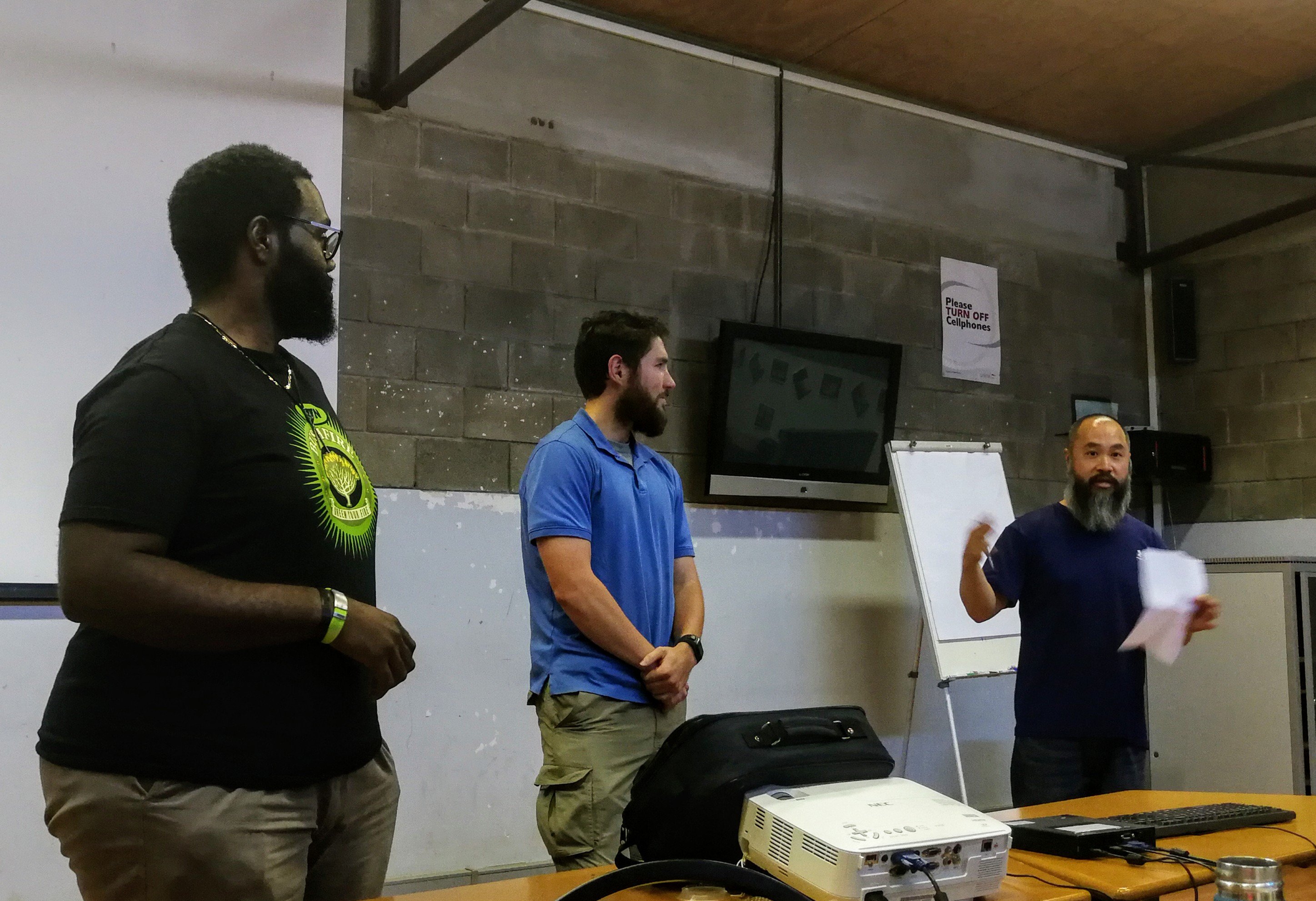
The above picture features myself with the other PCIT members as we were discussing PCIT with other PCVs. This photo was taken by Elise A. 

Be kind to yourself. 
Onward. 

Monday in a Picture – Of Legos and Robots

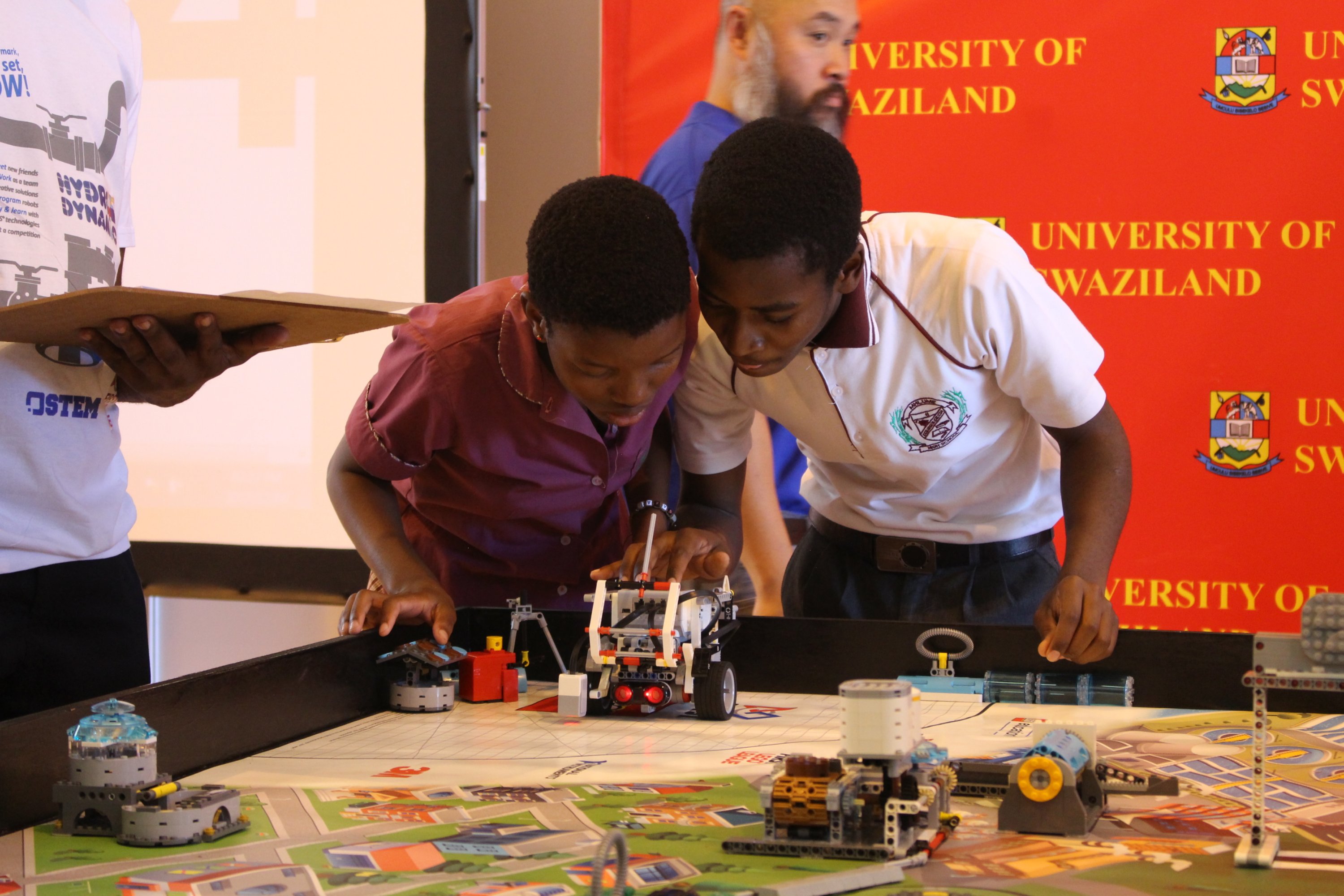
Recently, primary and high school students from all around Swaziland gathered at the University of Swaziland – Kwaluseni to compete with robots. The competition, which promotes science, technology, engineering, and math (STEM) in Swaziland, was sponsored in part by the U.S. Embassy, the STEM Foundation, and the Royal Swazi Sugar Corporation. More than thirty student teams competed. 

The students were tasked with using legos and a small computer to build and program an autonomous robot that could navigate a course and compete various missions. Some missions included delivering one structure to a specified location in the course, and retrieving an item from a location in the course. The students in the picture above are completing final checks before their robot attempts the missions on the course. 

In the end, a team from U-Tech High School in Big Bend won the competition, and will be journeying to compete in Johannesburg. 

Be kind to yourself. 
Onward. 

Monday in a Picture – The Tee Shirts of (Almost) Champions 

If you hang out on the internet long enough, you’re probably going to see memes mentioning championship tee shirts of American sports teams who lost the championship. The memes typically exclaim excitement about the second place team’s locker room shirts arriving in Africa. 

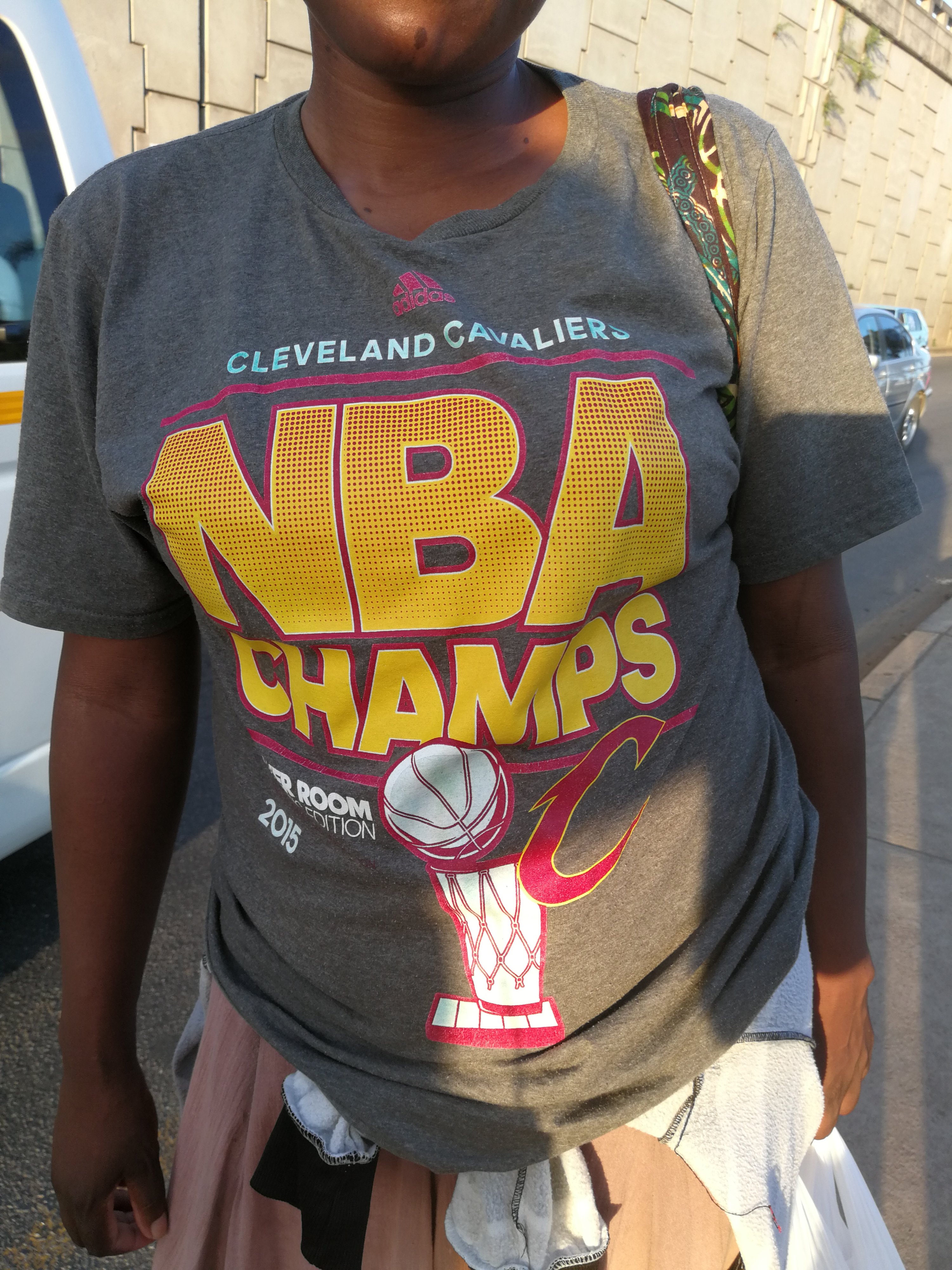
I wasn’t sure if the memes were based in truth or not. However, while out and about in Swaziland, I started seeing various championship tee shirts. The meme was confirmed. I’m not sure about the details of how the shirts reach their final destination. I’ve been told that the shirts are frequently donated to international non-governmental organizations (NGOs) who may use the shirts as incentives in various programming. While fans of the second place team experience heartbreak and wonder what if, someone a world away gets a shirt. 

The above picture was taken last week in mid-sized town in central Swaziland. The 2015 Cleveland Cavaliers didn’t win. But this lady (who graciously agreed to be photographed) did, and has the shirt to prove it. 

Be kind to yourself. 
Onward. 

Monday in a Picture – Testing

We are currently in the third and final term of the academic year in Swaziland. The biggest focus of term three is exams. Earlier this month, Form 3 (equivalent to grade 10) and Form 5 (equivalent to grade 12) students started writing their external exams. Think standardized testing with the highest of stakes. 

All other high school students will begin writing internal exams in November as schools prepare to close in early December. While internal exams are designed by a school’s teachers and vary from school to school, external exams are designed and written by the Examinations Council of Swaziland. Schools typically bring in external moderators, called invigilators, for the external exams while a school’s teachers will serve as invigilators for that school’s internal exams. 

Upon successful completion of the Form 3 exams, students earn a Junior Certificate. For this reason, the Form 3 exams are sometimes referred to as the JC exams. With a Junior Certificate, students can apply to various vocational schools around Swaziland. Upon successful completion of the Form 5 exams, students earn an ‘O’ level certificate. This is equivalent to a high school diploma, and is needed to attend university. In the picture above, the required notices are posted outside of one of the classrooms being used for external exams. Students are not allowed to bring extra materials into the exam room, and typically leave their bags lined up outside of the room. 

Be kind to yourself. 
Onward. 

Monday in a Picture – Tempting Ten Kilos of Fate

There’s a certain feeling that overcomes me as I’m about to finish something that I previously thought was impossible. I experienced that feeling again this past Saturday morning as I approached the final stretch of the ten kilometer race known as the Simunye International Friendship Run. 

I had been toying with the idea of trying a 10K recently. When I tried to register for one at the beginning of October, I was told that registration was closed. I was secretly relieved. Last week, I informed some running enthusiast PCVs that I was thinking about the 10K coming up. The response was positive, and the idea grew more prominent. I finally asked another PCV to check on registration and deadlines. A few hours later, I received a message that I had been registered. Cue the uneasiness and terror. I was sure that I wasn’t ready. I was wondering when I had acquired masochistic tendencies. In case you’re wondering, I hadn’t actually been training to run ten kilometers (or any distance). I started googling 10K advice. I had some slight concerns that I might actually die on the course. I tried calming myself. Another running PCV offered the advice, “just keep moving”.  

On race day, we arrived early and were shuttled from Manzini to a rural community in central Swaziland to begin the race. Most of the race was on gravel and dirt roads. Luckily, I had put together a 10K playlist. The music pushed me through the rough points and hills. Other runners helped as well, giving thumbs up as they raced past me. After more than nine kilometers, the end was in sight. Seeing the finish line gave me extra energy. Surprising myself, I finished. I ran ten kilometers! 

My legs will be taking a much deserved break over the next week or so. Who knows what my low barrier for suggestion can lead to next? 

Be kind to yourself. 
Onward. 

P.S. – As you can see, I received a medal. This was the wrong medal (for the 21KM race). I exchanged it for the proper one. I did not run a half marathon. 

Sweet Dreams – Trees. And no borders. 

Because I am posted in a country where I might contract malaria, I have been given an antimalarial medication called, “Mefloquine”. One of the side effects of this medication is lucid dreaming. The following is what I dreamt last night (as best I can remember). 

I was living somewhere more central in Africa. Maybe Rwanda.  I had come back from vacation in Kenya with friends when there was breaking news. There would be a stateless Africa. No more countries. No more borders. A political map of Africa would look much more like a topographical map. This wasn’t in ancient times. It was pretty modern. 

In order to make this work, there was a summit of all world leaders. It was like the United Nations, but presidents, prime ministers and monarchs sat around the table instead of ambassadors. The meeting was held in a top secret location. Hillary Clinton was there to represent the United States. She was the president. Because the meeting location was so secretive in the dense jungle, Air Force One wasn’t used. There was instead a modified sea plane that could also work on land. It was massive, and may have rivaled Air Force One in size. As we were leaving the world leader meeting, I noticed that Bill Clinton was there. He was walking just a few steps ahead of his girlfriend. It struck me as odd and admirable that Bill Clinton was carrying his own luggage. One of the other people told me about how he and Hillary had an open marriage. 

Before we were to take off, one of the plane’s staff suggested that we go for a hike to see the massive sequoia trees. Everyone agreed. The staff member leading the hike said that it was get very muddy and swampy. As we were hiking, I understood what that meant. My shoes and legs were covered in mud and other elements of Earth. The plane staff member said that it would just be a bit further and encouraged us to continue. We did. We were rewarded with the biggest tree many of us had ever seen. It was massive. Part of the inside had been cut out. The tree was part of a housing structure deep in the bush. We walked inside the housing structure and looked around. The part of the house that included the tree was the kitchen. A large part of the tree trunk was removed to add a dining room in the tree. There were even stairs in the tree that allowed you to go up in the tree trunk. 

As the Clintons and everyone else looked around, I wandered through the housing structure into a sunny room with an altar and various religious things in the wall. 

Be kind to yourself. 
Onward. 

To be seen, or the visibility of Black PCVs

Some of the greatest advice I’ve ever received is to “be who you needed when you were younger”. This can apply to many things. Today, I’ll apply it to Peace Corps prep work. When preparing for Peace Corps service, many people search tirelessly for information. What will it be like? What do I pack? Where will I live? What will I be doing? Do I have enough snacks? Many times, this search leads to blogs and social media allowing soon-to-be/hopeful PCVs a vast information buffet. 

During my own search, I found a lot of information about Swaziland including blogs and social media accounts of PCVs preceding me. Despite the wealth of information available, I struggled to find written accounts of Black PCVs. This was especially true of Black men. That gap was part of the impetus for starting this blog. In FY 2016 (when I started service), Black PCVs made up 7.8% of the 10000 plus volunteers in service. In the interest of sharing the Black PCV experience around the world, I have linked the blogs of Black PCVs here, under other PCV blogs of interest on this blog. My hope is that potential PCVs and other interested folks find this page resourceful in their quest to gather information about Peace Corps. 

Be kind to yourself. 
Onward. 

Monday in a Picture – Swazi Girls Believe

Last Wednesday, we celebrated International Day of the Girl Child. All around the world, girls live with varying degrees of inequality. Peace Corps volunteers try combat this inequality in various ways. One of the Peace Corps initiatives supporting girls’ empowerment is Girls Leading Our World (GLOW), which are community or school based clubs with curriculums on issues surrounding girls’ empowerment. Today, I’d like to highlight a fellow Swaziland PCV who took girls’ empowerment to new levels. 

Dawnita organized and hosted the inaugural Swazi Girls Believe conference to celebrate International Day of the Girl Child. More than 90 girls from a primary school in her community took part in the day’s activities. The activities included a reflection exercise on mind, body, and soul well-being, as well as panel discussions and other speakers. 

There was a photo booth and giveaways. The day ended with a hands-on workshop teaching the girls how to make reusable menstrual pads. 

The girls enjoyed themselves. Knowledge and wisdom was shared, and hopefully the girls feel more empowered because Swazi girls who believe are those who achieve. Congratulations Dawnita! The picture above was taken during the panel discussion. 

Be kind to yourself. 
Onward.