Monday in a Picture – Inspiration from Mother and others

​Everyday before I leave my house, this is what I see. It’s important to stay motivated and inspired while serving. People have sent postcards, greeting cards, and letters from all over the world during my time in Swaziland. I’m extremely grateful to all of those who have taken the time to write kind words and send them to me. 

To make my house feel more homey, I added pictures of those responsible for my being to the inspiration wall. They include my great grandfather, his daughter (my grandmother), and her daughter (my mother). It was on this day seven years ago that my mother passed away. She’s actually (partially) responsible for my serving in the Peace Corps. She pushed us to serve others with compassion. She instilled a sense of exploration. She made sure that we respected and embraced those who might be different from us.

Having these visual reminders has been great for keeping me motivated in the rural community. It makes my service feel a little less lonely. 

Be kind to yourself. 
Onward. 

Ever wonder what is Kirby doing? Follow the blog!

Monday in a Picture – Sports Day

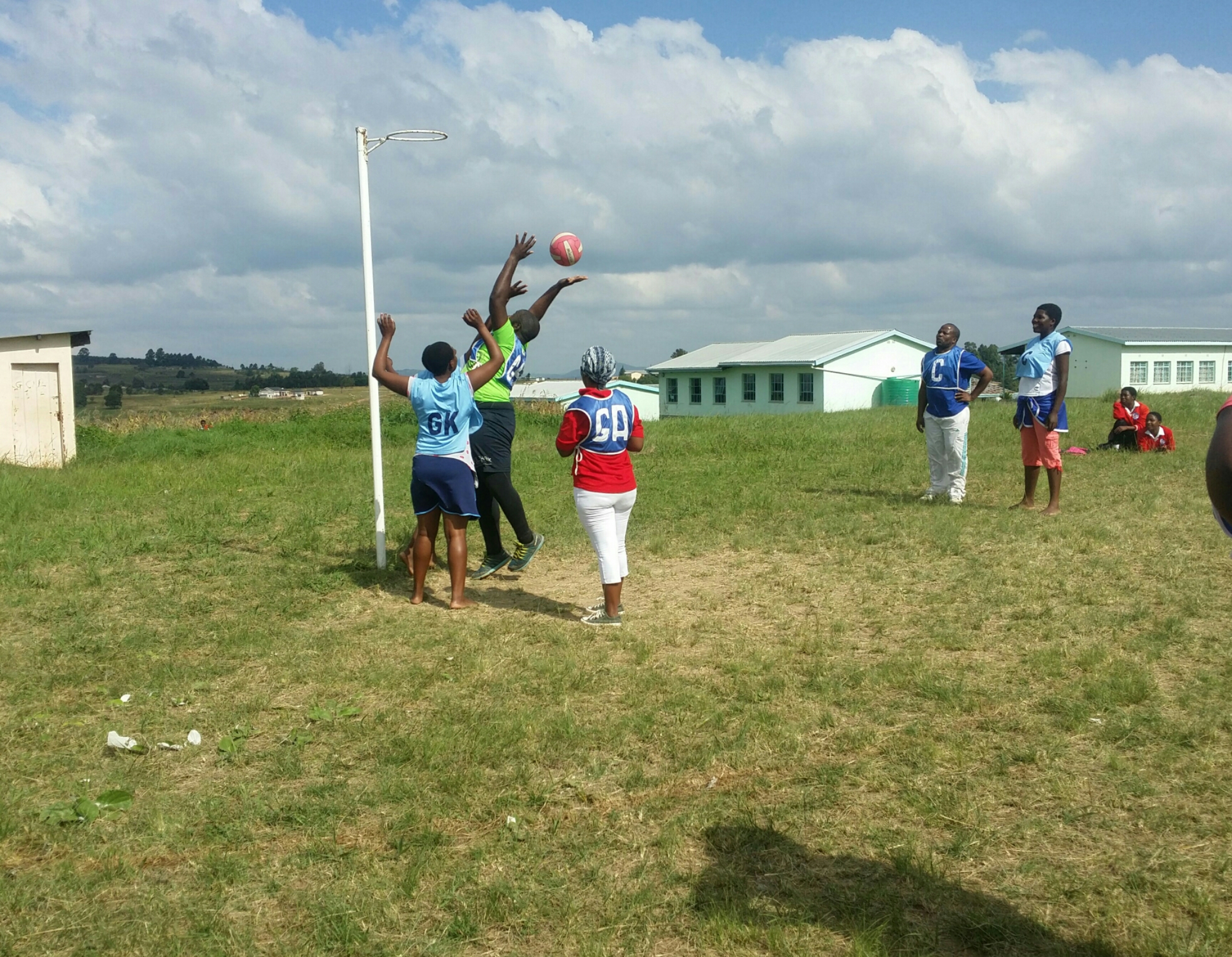
The school year in Swaziland is divided into three terms. During the first term (which we’re currently in), high school students participate in sports. There is special time set aside for athletics. Some schools compete against other schools. At my school, the students compete against other grade levels. The students compete in soccer, volleyball, and netball. 

Recently, our school hosted a series of sports days. The teaching schedules were pushed aside in favor sporting event schedules. When students and fellow teachers asked if I would be playing, I told them that I was unsure. On the actual day, there was tremendous encouragement for me to play netball. The teachers’ team needed players. I informed them that I didn’t know how to play. In true Swazi fashion, several teachers responded that it wasn’t a problem and that I would learn. 

I was told that netball is very similar to basketball. That’s true, as there is a ball and a basket. Imagine ultimate frisbee played on a basketball court. You have to put the ball in the basket (no backboard included) instead of putting it in the endzone. There are distinct positions on a netball team. 

In our first match, I played the position of Wing Defender. This position plays opposite of the Wing Attacker. I was responsible for stopping the advancement of the ball. I had to learn that netball is not supposed to be a contact sport. Old habits die hard. In our second match, I played the position of Goal Scorer. This position plays opposite of the Goal Keeper. As a Goal Scorer, I was responsible for scoring the goals (i.e, putting the ball in the basket). I learned that I’m not really good at this position. We lost both games. 

Be kind to yourself.
Onward. 

P.S. – Last week, Peace Corps Stories featured one of my blog posts! Tell your friends.  

Ever wonder what is Kirby doing? Follow the blog!

Monday in a Picture – Coming to America

Photo credit: U.S. embassy (Swaziland)

One of the things that I hear often around my community is a desire to go to the United States. Some people want to study in the U.S. Some want to travel and see the sights. 

In December, our country director sent all current Swaziland PCVs an email announcing recruitment for the Pan Africa Youth Leadership Program (PAYLP). The exchange program is sponsored and funded by the U.S. State Department, and coordinated locally through the American embassy and other partners. 

The school term had already finished, so I sent the message to a few teachers at my community high school to see if they wanted to nominate anyone. A teaching colleague wanted to nominate her son. He completed the application and motivation statements, and I submitted his application. 

In early February, we received notice that my teaching colleague’s son was one of five Swazi students accepted into the program and would be going to America in April. This started a busy month of obtaining passports and other documents. Then, there was the visa application process (which reminded me of the extreme privilege that comes simply with being born in America). Finally, there was the pre-departure orientation at the U.S. embassy in Swaziland. The students were able to meet the rest of the cohort, attend visa interviews, and allay some fears and worries about the trip. 

There was a video conference with representatives from the State Department, other partners, and participants from all PAYLP countries (10 nations in total, including Swaziland). The students were all very excited. This month, their collective excitement becomes reality when they arrive in the United States. They will meet with various American officials, study at local universities, and have homestay experiences with American families. The only thing left to do is get on the plane. 

In the picture above, the Public Affairs Officer (middle) poses with the students and their adult mentor.

Be kind to yourself. 
Onward. 

Ever wonder what is Kirby doing? Follow the blog!

Monday in a Picture – School Assembly 

I spend most of my time at the high school. There are classes to be taught and conversations to be had. In addition, I genuinely enjoy being at the school. The students are engaging while challenging me to speak more siSwati. Fellow teachers bounce ideas around with me, and also encourage me to speak more siSwati. 

Most days, the school day begins and ends with an assembly. When the bell rings, all students come together and stand in line with their respective grade level. A teacher or administrator stands in front to lead the learners through the assembly. 

One of the older students will start to sing a song. The other students join in the singing at appropriate times. After the song, the students will recite a prayer. The song is always in siSwati or isiZulu. The prayers and prayer languages vary, and are sometimes recited in English. After the prayer, the staff person facilitating the assembly will say “good morning/afternoon, students”. In unison, the students reply “good morning/afternoon sir/ma’am. Good morning/afternoon teachers. Good morning/afternoon sisters. Good morning/afternoon brothers.” At this point in the assembly, staff make any announcements pertaining to the students (i.e., remind your parents about the meeting tomorrow, etc.) The assembly ends after announcements are made, and students go either to class or home. 

The above picture is of the students lined up for afternoon assembly at the high school. 

Be kind to yourself. 
Onward.

Ever wonder what is Kirby doing? Follow the blog!

Monday in a Picture – Cutting Grass

It was the summer of 2006. This was the summer before my senior year of college, and I was spending it with my uncle and his family in Fayette County, Georgia. All of the single family homes seemed to have perfectly manicured lawns. There wasn’t a blade of grass out of place. On one Saturday morning, my cousin, uncle, and I got up early. It was time to cut the grass at our house. 

This was a new experience for me. I had never cut grass, or done any yard work. My cousin and uncle taught me how to start and use the gas powered lawnmower. It was hard work. I wasn’t able to achieve that perfectly manicured look that I saw at the neighbors’ homes, but I got the job done. 

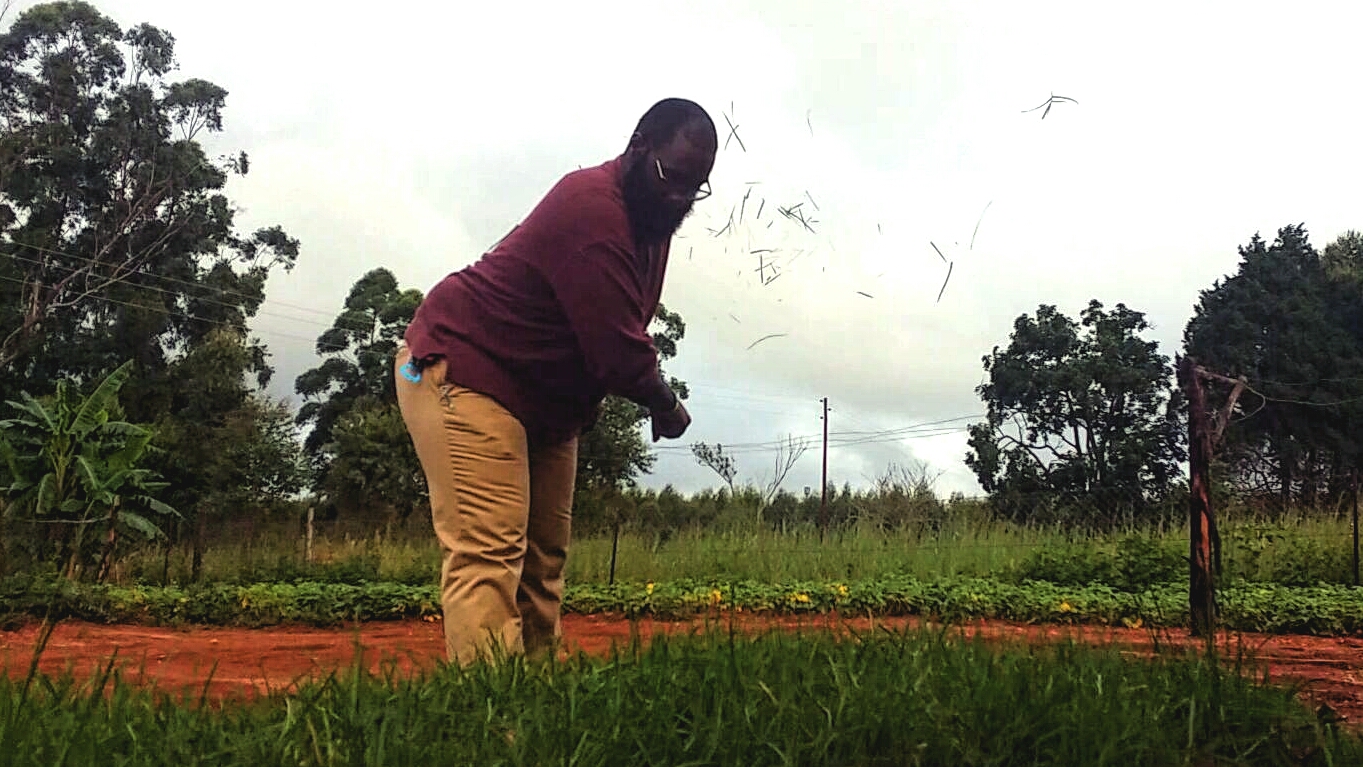
Almost eleven years later, I am responsible for maintaining the grassy area around my home on the homestead. My host mom reminds me of this when my grass grows too high. She warns me that high grass gives snakes places to hide. 

Lawnmowers are a rarity in Swaziland. They are practically non-existent in the rural community. There are two options for cutting grass. There’s an older pair of garden shears, and there’s something called a siheshe (pronounced see-heh-shay), or slasher. It’s smaller than a bush knife and has a modest handle with a thin, long metal blade. When my host brother was home for the Christmas holidays, I saw him using the siheshe to cut grass. I asked him how one cut grass with it. He responded simply, “just beat the hell out of it”. I remembered that on one weekday afternoon as I attempted to cut my grass, Swazi style. Eventually, I found a rhythm. I also found a new appreciation for lawnmowers. The slasher gets the job done and gives you a workout. Luckily, I only have to cut the grass twice a month. 

Be kind to yourself. 
Onward. 

Follow What is Kirby Doing? on WordPress.com

Monday in a Picture – Water from Jojo

Some weeks ago, we experienced the effects of Cyclone Dineo. It brought high winds and an abundance of rain. For a week, rain muddied the roads while rain clouds hid the sun. As a rookie gardener, I have learned to appreciate the rain for what it does to my garden. Swaziland, as a whole, appreciates the rain as southern Africa recovers from a severe drought. 

Water is necessary regardless of where you live. Across the kingdom, different families get water in different ways. Some families have indoor plumbing with running water. Some families take water cans to the river, and fill them before returning home. In some communities, there is a community tap which typically pulls water from a rain caching reservoir. On some homesteads, you find a borehole which extracts water from the ground. I have also seen families divert streams or rivers to deliver water to the homestead. 

On my homestead, we are fortunate to have a jojo tank. The jojo tank sits on a large concrete slab, and has one tap at the bottom. The jojo tank is connected to rain gutters leading into to the jojo tank. Our jojo tank has a capacity of about 5000 liters. When the rains come, the jojo tank fills with water and all is well. When the rains don’t come, there are services that can come out and fill your jojo tank. Our jojo tank provides all of the water used for drinking, cooking, gardening, cleaning, and bathing. I also use the jojo tank to wash my hands after using the pit latrine. 

To get water in my house, I fill a 25 liter water can (as seen in the picture above) to bring inside. Because water access isn’t as simple as turning on a faucet in the kitchen or bathroom, I’m more cognizant of my water usage. I try to conserve water. Now, I can happily add “showering with 5 liters of water” to my skill set. 

Be kind to yourself. 
Onward. 

Follow What is Kirby Doing? on WordPress.com

Monday in a Picture – The Kraal

Over the course of several weeks, I have featured my homestead and pit latrine. Another integral part of the Swazi homestead dynamic and structure is the kraal (pronounced crawl). The kraal is where a family’s cattle are kept. The kraal is also a symbol in signifying that family’s wealth.

In rural communities, personal bank accounts are less common. It’s not that the money isn’t there. The money takes on a different form. Cows are money. A family with a lot of cows is considered a wealthy family. Some families also invest in cows. When baby calves are born, wealth is increased.

Cows are very much intertwined into Swazi culture. If I want to build a home for myself and my family in a rural community, I am expected to give a certain number of cows to the umphakatsi (pronounced oom-pa-got-see), or local community leadership. If I want to marry, I must pay lobola (low-bow-la), or bride price, to the bride’s family. The lobola is traditionally negotiated between the families, and paid in cattle. For major events in a family or community, a cow may be slaughtered in honor of the occasion.

The cows are released from the kraal daily and taken to graze by a cattle herder. Amazingly, the cows know exactly where their respective kraal is and the cattle herder knows exactly which cows belong in that kraal.

In addition to wealth and food, the kraal also provides plenty of cow manure for to be used as fertilizer during ploughing and planting season.

Be kind to yourself.
Onward.

Follow What is Kirby Doing? on WordPress.com

From the @whatisKirbydoing Instagram: February 22, 2017 at 11:24AM

It’s been raining for the past week. That means muddy gravel roads and bridges under water. It also means #wildflowers get nourished and add brilliant color to gray days. Lastly, it means that I actually googled “African violet” and learned that this isn’t it.

#HowiSeePC #PeaceCorps #Swaziland #Africa #Nature #PCV

​Monday in a Picture – My Pit Latrine 

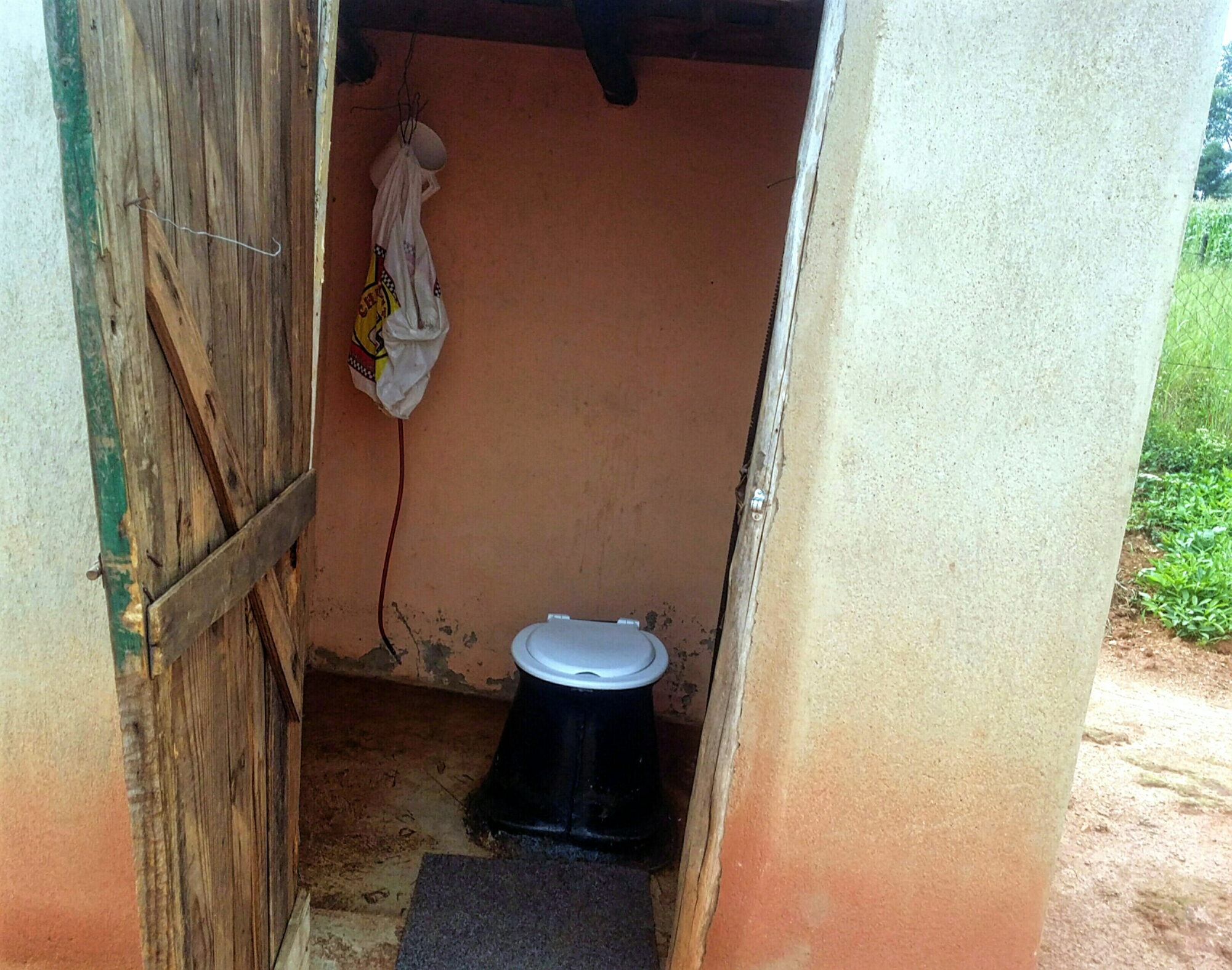
I thought about titling this, “My Poopy Place”. Alas, I resisted. Everyone poops. As such, everyone needs some a method and a place to relieve themselves of fecal matter. While some rural homesteads and urban businesses have bathrooms furnished with flushing toilets, many of the homesteads in my community utilize some kind of pit latrine when handling bathroom business. My homestead falls into this category. The above picture is our pit latrine. 

There’s a toilet-like structure that sits over a very large deep hole (pit). All of the waste goes into that hole. Around the toilet-like structure, there are four walls (including one with a door). In my latrine, I have enough space to sit comfortably while handling my business. The door’s lock is a wire that wraps around a nail on the door frame. My latrine also has a ventilation pipe to help mitigate the smell of decomposing waste. 

I’ve never seen a latrine filled. However, I’ve been told that the latrine is considered full when the waste is between 1.5 and 2 meters away from the top of the hole. After a latrine is full, a tree of some variety is planted in that space as the space is now very fertile. Another hole will be dug so that there can still be a place for using the toilet. 

Because there is no light in my latrine, I tend not to use the latrine after dark. I’ve heard stories of crafty, stealthy creatures biting butts in the dark. While I realize that my concern is probably irrational and could be alleviated with a headlamp, I’ll stick to the safety of my pee bucket. 

Be kind to yourself. 
Onward. 

P.S. – Here’s a picture of the inside of my latrine. 

Follow What is Kirby Doing? on WordPress.com