Monday in a Picture – Water from Jojo

Some weeks ago, we experienced the effects of Cyclone Dineo. It brought high winds and an abundance of rain. For a week, rain muddied the roads while rain clouds hid the sun. As a rookie gardener, I have learned to appreciate the rain for what it does to my garden. Swaziland, as a whole, appreciates the rain as southern Africa recovers from a severe drought. 

Water is necessary regardless of where you live. Across the kingdom, different families get water in different ways. Some families have indoor plumbing with running water. Some families take water cans to the river, and fill them before returning home. In some communities, there is a community tap which typically pulls water from a rain caching reservoir. On some homesteads, you find a borehole which extracts water from the ground. I have also seen families divert streams or rivers to deliver water to the homestead. 

On my homestead, we are fortunate to have a jojo tank. The jojo tank sits on a large concrete slab, and has one tap at the bottom. The jojo tank is connected to rain gutters leading into to the jojo tank. Our jojo tank has a capacity of about 5000 liters. When the rains come, the jojo tank fills with water and all is well. When the rains don’t come, there are services that can come out and fill your jojo tank. Our jojo tank provides all of the water used for drinking, cooking, gardening, cleaning, and bathing. I also use the jojo tank to wash my hands after using the pit latrine. 

To get water in my house, I fill a 25 liter water can (as seen in the picture above) to bring inside. Because water access isn’t as simple as turning on a faucet in the kitchen or bathroom, I’m more cognizant of my water usage. I try to conserve water. Now, I can happily add “showering with 5 liters of water” to my skill set. 

Be kind to yourself. 
Onward. 

Follow What is Kirby Doing? on WordPress.com

Monday in a Picture – The Kraal

Over the course of several weeks, I have featured my homestead and pit latrine. Another integral part of the Swazi homestead dynamic and structure is the kraal (pronounced crawl). The kraal is where a family’s cattle are kept. The kraal is also a symbol in signifying that family’s wealth.

In rural communities, personal bank accounts are less common. It’s not that the money isn’t there. The money takes on a different form. Cows are money. A family with a lot of cows is considered a wealthy family. Some families also invest in cows. When baby calves are born, wealth is increased.

Cows are very much intertwined into Swazi culture. If I want to build a home for myself and my family in a rural community, I am expected to give a certain number of cows to the umphakatsi (pronounced oom-pa-got-see), or local community leadership. If I want to marry, I must pay lobola (low-bow-la), or bride price, to the bride’s family. The lobola is traditionally negotiated between the families, and paid in cattle. For major events in a family or community, a cow may be slaughtered in honor of the occasion.

The cows are released from the kraal daily and taken to graze by a cattle herder. Amazingly, the cows know exactly where their respective kraal is and the cattle herder knows exactly which cows belong in that kraal.

In addition to wealth and food, the kraal also provides plenty of cow manure for to be used as fertilizer during ploughing and planting season.

Be kind to yourself.
Onward.

Follow What is Kirby Doing? on WordPress.com

From the @whatisKirbydoing Instagram: February 22, 2017 at 11:24AM

It’s been raining for the past week. That means muddy gravel roads and bridges under water. It also means #wildflowers get nourished and add brilliant color to gray days. Lastly, it means that I actually googled “African violet” and learned that this isn’t it.

#HowiSeePC #PeaceCorps #Swaziland #Africa #Nature #PCV

​Monday in a Picture – My Pit Latrine 

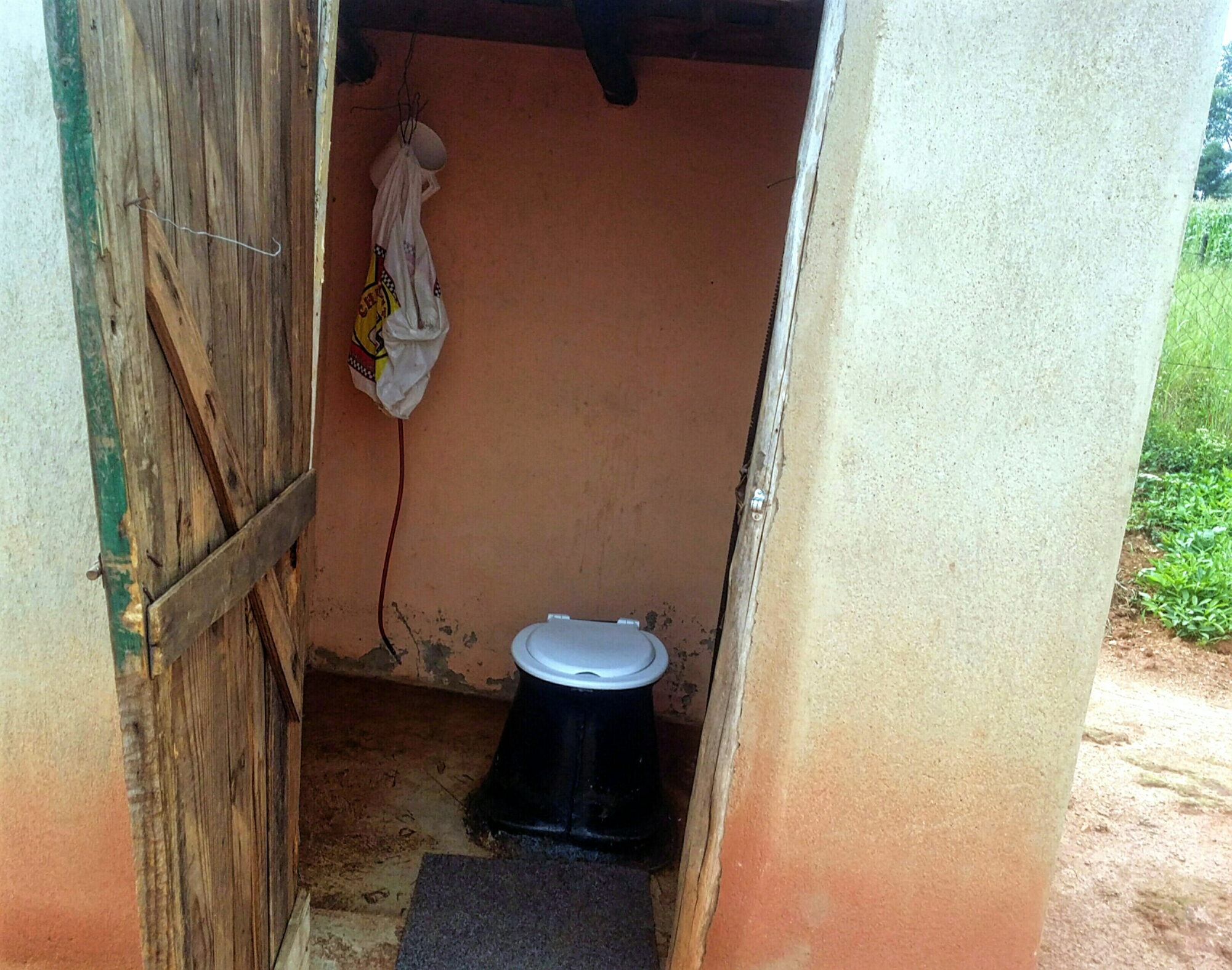
I thought about titling this, “My Poopy Place”. Alas, I resisted. Everyone poops. As such, everyone needs some a method and a place to relieve themselves of fecal matter. While some rural homesteads and urban businesses have bathrooms furnished with flushing toilets, many of the homesteads in my community utilize some kind of pit latrine when handling bathroom business. My homestead falls into this category. The above picture is our pit latrine. 

There’s a toilet-like structure that sits over a very large deep hole (pit). All of the waste goes into that hole. Around the toilet-like structure, there are four walls (including one with a door). In my latrine, I have enough space to sit comfortably while handling my business. The door’s lock is a wire that wraps around a nail on the door frame. My latrine also has a ventilation pipe to help mitigate the smell of decomposing waste. 

I’ve never seen a latrine filled. However, I’ve been told that the latrine is considered full when the waste is between 1.5 and 2 meters away from the top of the hole. After a latrine is full, a tree of some variety is planted in that space as the space is now very fertile. Another hole will be dug so that there can still be a place for using the toilet. 

Because there is no light in my latrine, I tend not to use the latrine after dark. I’ve heard stories of crafty, stealthy creatures biting butts in the dark. While I realize that my concern is probably irrational and could be alleviated with a headlamp, I’ll stick to the safety of my pee bucket. 

Be kind to yourself. 
Onward. 

P.S. – Here’s a picture of the inside of my latrine. 

Follow What is Kirby Doing? on WordPress.com

From the @whatisKirbydoing Instagram: February 04, 2017 at 07:40AM

Today I learned that Dr. Carolyn Payton was the first Black director of the #PeaceCorps. She was also the first woman to lead the organization. #BlackGirlMagic #BlackExcellence #BlackHistory
Another cool fact: she started her teaching career at my alma mater, #LivingstoneCollege.
Photo credit: Getty Images

​Monday in a Picture – Build Your Own Bookshelf 

When I moved into my home here in Swaziland, it was a blank canvas. There was no furniture. There were empty walls. It was an invitation to create. 

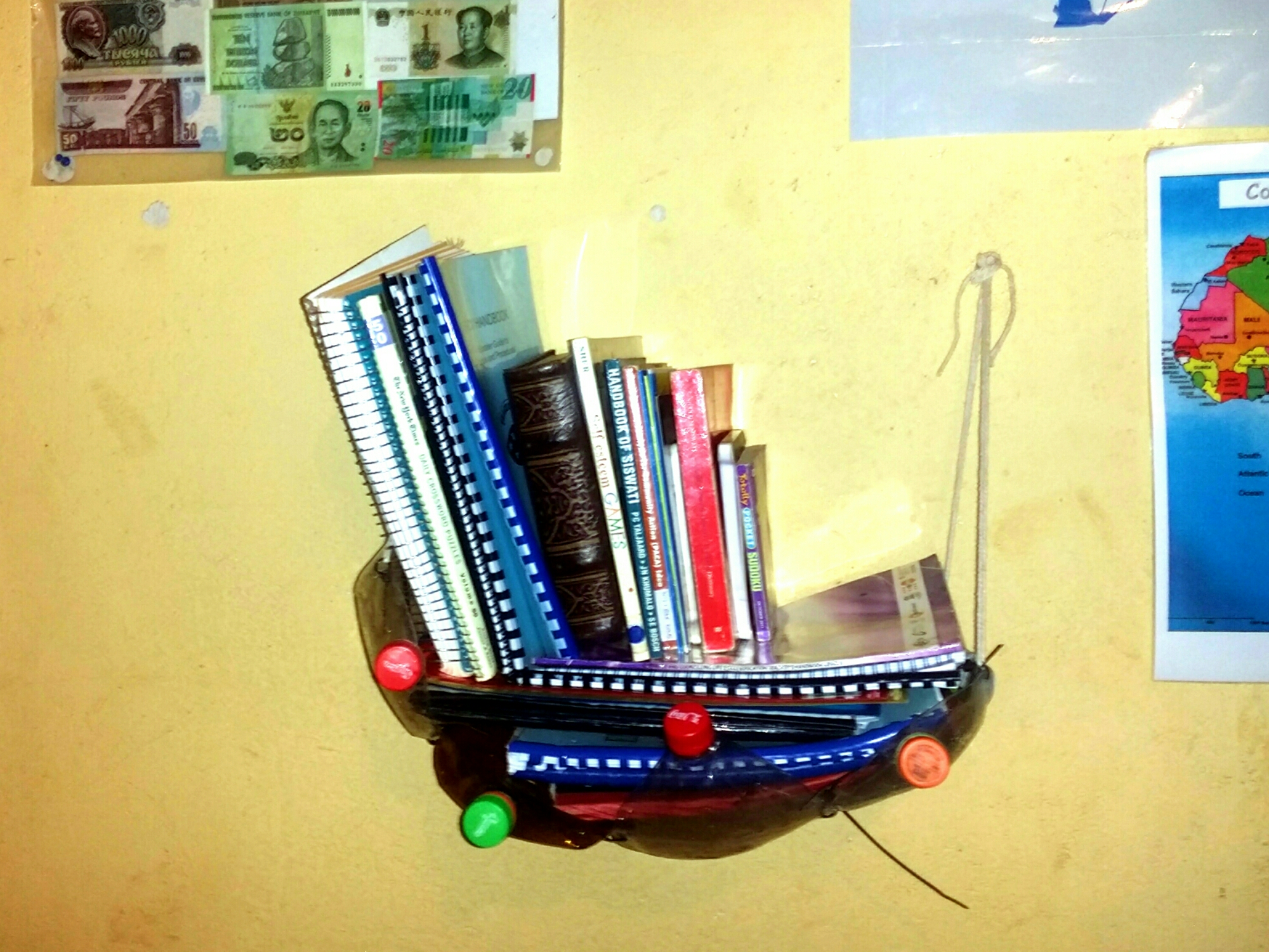
After settling in to my home with a bed and homemade closet, it was time to tackle the next challenge. Where do I store all of the notebooks, manuals, and other random books that I’ve acquired since beginning my service? Thankfully, I rid myself of my book collection before leaving DC. Furniture can be expensive, especially when factoring in transportation costs. Building my closet provided me with the confidence and inspiration to take on another project: my bookshelf. 

I had some five empty soda bottles, thin rope, cement nails, zip ties, and duct tape. In my first attempt, I wrapped the bottles with the duct tape. Then, I tied the rope onto the ends of the bottles and wrapped the rope around the cement nails to hold it up. This setup wasn’t the best for bearing heavy loads. In my second attempt, I pushed all air out of the bottles and poked holes along the sides of the crushed bottles. Then, I zip tied the crushed bottles together and tied rope to the zip ties on the end. Finally, I wrapped the rope around the cement nails. This setup has been great for bearing the load of books. 

Be kind to yourself. 
Onward. 

Follow What is Kirby Doing? on WordPress.com

​Monday in a Picture – The Bus Rank 

The majority of transportation around Swaziland is done by minibus taxis, known as khombis. Imagine hundreds of fifteen passenger vans (typically Toyota Quantums or Mercedes Benz Sprinters) taking men, women, children, and chickens everywhere. The khombis travel through the cities and the rural communities. They travel on paved, tar roads, and on gravelly, dirt roads. Although the vans are  15 passenger vans, sometimes there are more than 15 passengers on board. The good news is that everyone gets to wherever they are going. The not so good news is that personal space doesn’t exist when riding in khombis (or buses) here. 

One of the features of Swazi transportation is the hub and spoke system. There are two major transportation hubs in Swaziland: Mbabane (the capital) and Manzini. These transportation hubs, known as bus ranks, are typically filled with khombis, buses, and young men yelling and/or whistling to advertise their khombi or bus, and where it’s going. For example, you might hear a loud whistle followed by Mankayane! Mankayane! Mankayane! If you don’t hear your destination being yelled, you can always stop to ask the bobhuti (pronounced bo-boo-tee), or young men, where you can find the khombi or bus that you need. One of the really helpful things about the bus rank is that khombis and buses tend to be in the same spot or area everyday.

While buses tend to have specified (though not posted) departure times, khombis tend to leave whenever they fill up with passengers. This could be why the bobhuti sometimes grab your bags while yelling questions like, “Uyaphi?” (pronounced oo-yah-pee), or where are you going? It makes great sense. A khombi sitting in the bus rank is not a khombi making money. 

You can also find all kinds of items for sale at the bus rank. There are clothing items, cosmetics, snack food, produce, drinks, and more. While buses are waiting to depart, various vendors will also come around to sell their wares. There are also various shops and stores that surround the bus rank. Because most urban businesses in Swaziland close in the early evening (between 5PM and 7PM), the bus rank has much less activity and traffic at this time. 

The picture above shows rows of khombis parked and waiting to fill up with passengers in the Manzini bus rank, which is the largest in the country. 

Be kind to yourself. 
Onward. 

Follow What is Kirby Doing? on WordPress.com